Enhanced Role of India in the Global Mine Action
20 Aug 2021 Administartor, IIFOMAS

The technological contributions from India's defense and civilian sectors have significantly advanced global mine action capabilities, particularly in developing cost-effective solutions suitable for resource-constrained environments. Indian companies and research institutions have innovated in areas such as ground-penetrating radar systems, robotic mine detection platforms, and protective equipment designed specifically for tropical and desert conditions common in mine-affected regions. The country's information technology sector has also contributed to mine action through geographic information systems (GIS) and database management solutions that help track clearance progress and coordinate international efforts. India's pharmaceutical industry has supported mine action through the development of affordable prosthetics and rehabilitation equipment for landmine survivors, while Indian medical professionals have provided training and expertise in trauma surgery and rehabilitation techniques in affected countries.
India's diplomatic leadership and financial commitments have strengthened the institutional framework for global mine action, positioning the country as a bridge between developed and developing nations in addressing this humanitarian challenge. As a major contributor to UN peacekeeping budgets and operations, India has consistently advocated for enhanced mine action components in peacekeeping mandates and has pushed for greater integration between peacekeeping forces and humanitarian demining organizations. The country has also established bilateral partnerships with mine-affected nations, providing technical assistance, equipment donations, and training programs that extend beyond traditional peacekeeping frameworks. India's role in regional organizations such as the South Asian Association for Regional Cooperation (SAARC) has facilitated mine action initiatives in neighboring countries, while its growing influence in international forums has enabled it to advocate for increased global funding and attention to mine action efforts. This multifaceted approach demonstrates how emerging powers can leverage their unique capabilities and perspectives to address global humanitarian challenges while building diplomatic relationships and enhancing their international standing.
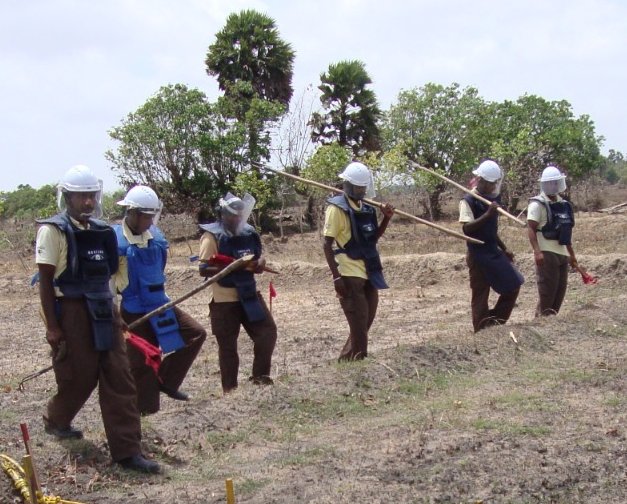
Retired Indian Army personnel have leveraged their extensive field experience to establish specialized private enterprises that have become increasingly important players in the global mine action sector. These companies, founded and led by former military engineers, explosive ordnance disposal experts, and peacekeeping veterans, bring decades of practical experience gained from operations along some of the world's most heavily mined borders and conflict zones. Their intimate understanding of landmine deployment patterns, clearance methodologies, and the operational challenges faced in diverse geographical and climatic conditions has enabled them to develop highly effective business models that combine military precision with commercial efficiency. These enterprises have successfully competed for international contracts in countries across Africa, Asia, and the Middle East, often winning projects based on their reputation for delivering results in challenging environments where other contractors have struggled.
The technological innovation and cost-effective solutions developed by these Indian private enterprises have democratized access to professional mine clearance services for countries with limited budgets. Drawing on India's robust engineering and manufacturing capabilities, these companies have developed indigenous mine detection equipment, protective gear, and clearance vehicles that perform comparably to Western alternatives at significantly lower costs. Many of these enterprises have established partnerships with Indian technology companies and defense manufacturers to create integrated solutions that include training programs, equipment supply, and ongoing technical support packages tailored to the specific needs of developing nations. Their ability to operate with smaller profit margins while maintaining high safety standards has made professional mine clearance services accessible to governments and organizations that previously relied solely on international donor funding or volunteer efforts.
Indian private enterprises have also pioneered innovative business models that combine humanitarian objectives with sustainable commercial practices, creating long-term value for both clients and local communities. Many companies emphasize extensive training and employment of local personnel, ensuring that mine clearance projects leave behind enhanced national capabilities rather than creating dependency on foreign expertise. Their approach often includes community engagement programs, agricultural rehabilitation initiatives, and economic development components that address the broader socio-economic impacts of mine contamination. By establishing regional offices and maintenance facilities in key markets, these enterprises have created networks that can respond rapidly to emerging needs while providing ongoing support for cleared areas. This model has proven particularly effective in post-conflict settings where rapid deployment and cultural sensitivity are crucial for success, positioning Indian private enterprises as preferred partners for governments and international organizations seeking comprehensive, sustainable solutions to landmine contamination.
Search
Categories
Blog

06 Apr 2026
Mine Action in the Era of Hybrid Warfare | International Mine Action Day
06 Mar 2026
Technology and Cooperation for a Safer Tomorrow ( AI, Robotics, and Global Partnerships in Mine Action
05 Mar 2026
One Humanity: Integrating Mine Action with Global Humanitarian and Development Goals
25 Jan 2026
MINE ACTION FOR THE FUTURE : ENSURING SAFER COMMUNITIES

21 Jan 2026
AI-Driven Predictive Analytics: Landmine Threat Mitigation in the Russia-Ukraine Conflict

20 Aug 2025
Governments Reverse Landmine Ban Amid Rising Security Concerns

14 Aug 2025
The Future of Mine Action: Innovation and Global Cooperation
01 Aug 2025
Training & Capacity Building in Conflict Zones

15 Sep 2021
The Global Impact of Landmines: Why We Must Act Now

28 Aug 2021
Mine Action Synopsis