Introduction
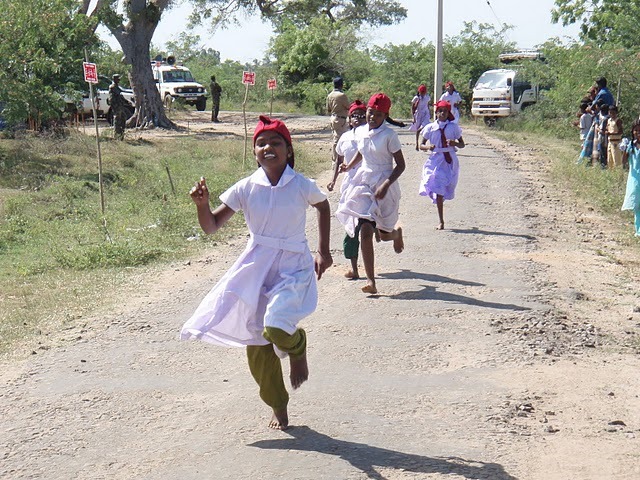
Landmines and explosive remnants of war (ERW) are more than a humanitarian crisis—they are formidable obstacles to sustainable development. They restrict access to fertile land, delay infrastructure projects, impede delivery of essential services, and pose a continuous threat to displaced populations returning home. Millions of hectares globally remain unusable due to legacy landmines and ERW contamination, significantly affecting livelihoods, and infrastructure rollout. This contamination locks communities in cycles of poverty by making productive land unusable and by undermining mobility, education, and economic revival.
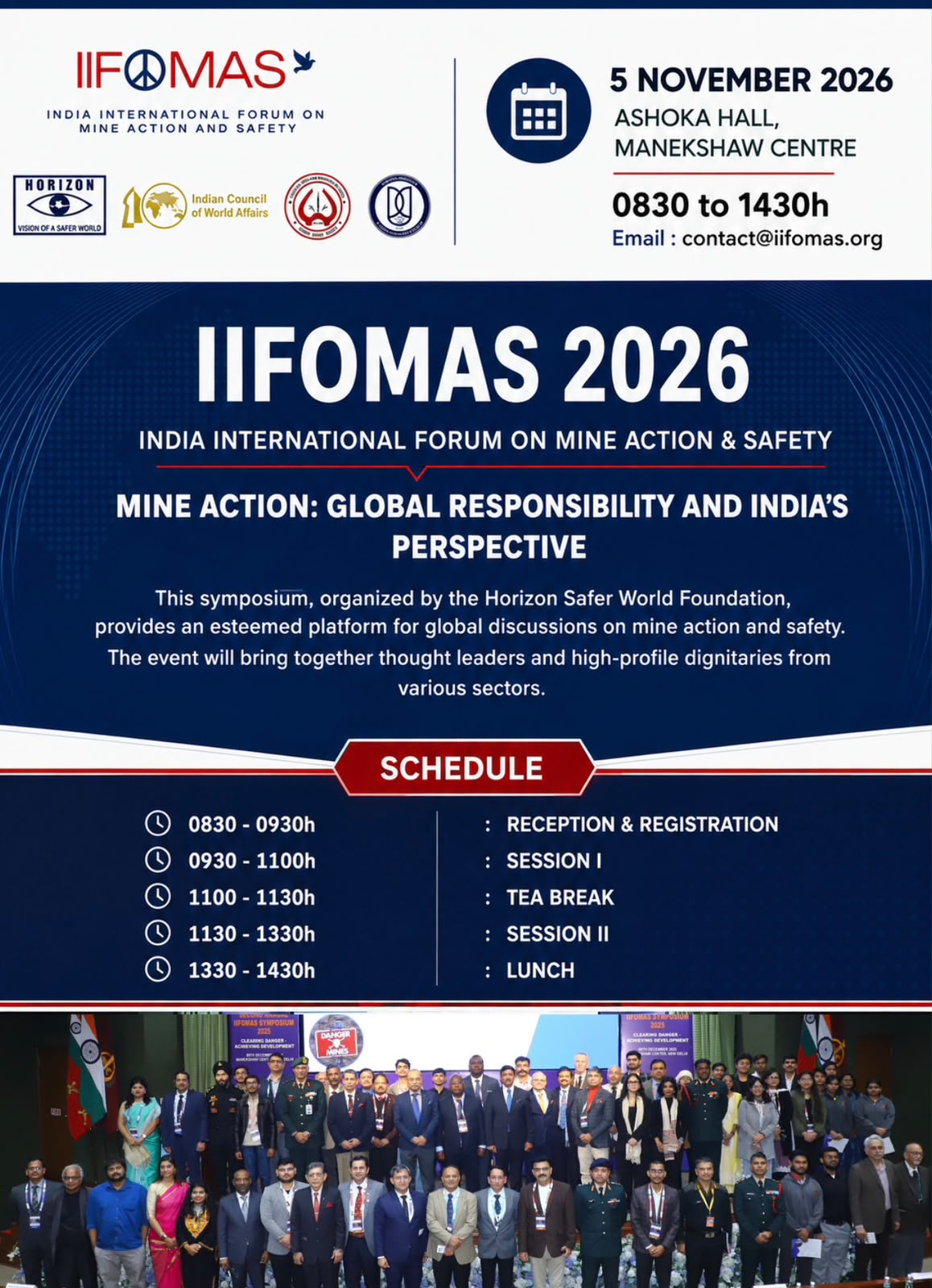
As post-conflict nations strive to rebuild, Mine Action has proven to be a foundational enabler of long-term recovery. It is no longer seen solely as an emergency response but as a prerequisite for peace building and inclusive development. Second edition of the Annual IIFOMAS (India International Forum on Mine Action & Safety) Symposium aims to highlight how Mine Action, when aligned with national priorities and development frameworks, catalyzes progress in trade, agriculture, housing, and social reintegration.
Symposium Details
IIFOMAS is a strategic think tank under Horizon Safer World Foundation (HSWF). It aims to convene global minds, sectoral leaders, policy architects, and humanitarian actors working at the intersection of Mine Action, infrastructure development, and sustainable growth.
The Annual IIFOMAS Symposium titled “Clearing Danger to Development” will be conducted at Manekshaw Auditorium in New Delhi on 09 Dec 2025. This edition of IIFOMAS Symposium brings together a powerful message: "Before nations can build, they must first clear the invisible threats beneath their soil."
The symposium will serve as a call-to-action to align Mine Action efforts with national development goals, especially in regions affected by historical conflicts. The event will also showcase cutting-edge technologies available in India in Mine Action.
Objective
The Symposium aims to:
• Highlight the multifaceted linkages between Mine Action and post-conflict reconstruction and redevelopment.
• Generate pragmatic policy and operational recommendations for aligning Mine Action with national development priorities.
• Explore India’s strategic and humanitarian role in global Mine Action efforts, guided by the spirit of Vasudhaiva Kutumbakam (One Earth, One Family).
• Reinforce India’s role as a principled leader of the Global South.
• Highlight modern scalable Indian technologies in Mine Action.
Themes & Focus Areas
• Integrating clearance with reconstruction: planning land release for agriculture, housing and infrastructure.
• Community-centred mine action: victim assistance, livelihoods restoration and social reintegration.
• Innovations in detection and clearance.
• Policy, financing and partnerships: mobilising donors, private sector engagement and international cooperation.
• Environmental considerations in clearance and redevelopment: remediation, resettlement and ecological restoration.
Relevance in the contemporary geopolitical environment
Two global trends make the Symposium’s theme urgent. First, protracted and recent conflicts have left extensive contamination that undermines reconstruction and regional stability; land release and risk reduction are prerequisites for refugee returns, agricultural recovery and infrastructure programs.
Secondly, as great-power competition and regional insecurity reshape supply chains and development priorities, access to safe land becomes a strategic asset for host countries and external partners alike.
Topics and Sessions
The Symposium will be divided into following sessions :
Opening Session
• Introduction and Keynote Address
Session I: Mine Action as a Development Enabler
• Lecture: "From Danger to Development: Aligning Mine Action with the SDGs"
Focused on integrating Mine Action into broader development and recovery strategies, and how it supports key Sustainable Development Goals such as poverty alleviation, education, food security, and environmental restoration.
• Lecture: Partnerships for Progress: Public, Private, and Philanthropic Roles in Clearance"
Examining successful funding mechanisms and collaboration models between governments, private sector, and NGOs, with a focus on scalability and innovation
• Panel Discussion: "Clearing Land for Growth: From Contamination to Opportunity"
Speakers will highlight on how cleared land can be transformed into productive assets, enabling economic independence and sustainable livelihoods.
Session II: India’s Role in Global Cooperation on Mine Action
• Lecture: "Horizon’s Humanitarian Footprint in Mine Action"
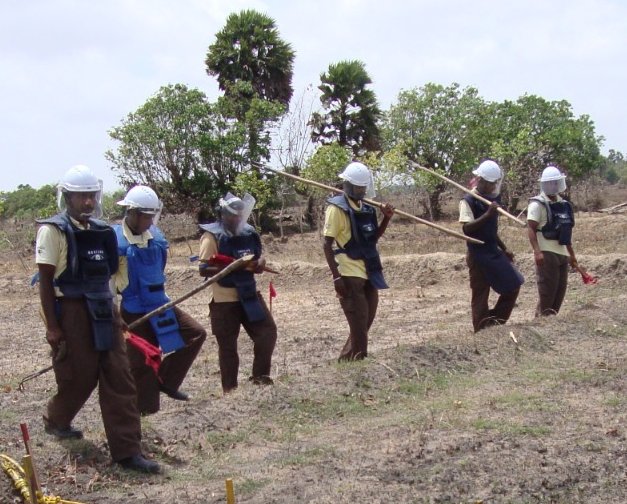
Showcasing Horizon’s historical and ongoing contributions—highlighting operations in Sri Lanka, Jordan, Transcaucasia, and beyond.
• Lecture: "Humanitarian Demining: Legal Challenges and International Norms"
The lecture will explore the legal foundations of humanitarian demining, examining international treaties, conventions, and customary norms that govern mine action. It will highlight the obligations of states and organizations, and the legal challenges faced in ensuring safe, accountable, and humanitarian clearance of explosive remnants of war.
• Panel Discussion: " India’s emergence as a compassionate force in Mine Action"
In a rapidly changing global landscape, India assisting other Global South countries, and reinforcing its vision of global unity and shared prosperity.
Session III: Emerging Technologies in Mine Action: Innovation for Safer Futures
• Lecture 1: “Advances in Detection Technologies: Shaping the Future of Threat Identification”
Building on decades of painstaking progress, modern detection technologies now offer unprecedented precision and efficiency in locating hidden threats.
• Lecture 2: "Next-Generation Protective Equipment: Innovations for Enhanced Safety”
This session highlights the latest advancements in protective gear, ensuring greater safety and resilience for those who serve on the frontlines of humanitarian demining.
• Lecture 3: “Artificial Intelligence and Robotics: Transforming Mine Action Operations”
The integration of AI and robotics marks a transformative era in mine action, reducing human risk and increasing operational reach.
Closing Session
• Closing Remarks
• Vote of Thanks
Participants
Approximately 150 delegates are expected to attend, including representatives from:
• UN Agencies
• Indian Ministries (MEA, MoD, MoF)
• Ambassadors and Military Attaches
• International and National NGOs
• Think Tanks
• Infrastructure & EPC Companies
• Donor Agencies
• Academic Institutions
• Private-sector Innovators
• Field-level Practitioners and Community Representatives
Conclusion
With over 60 Countries still contaminated and around 6,000 casualties annually, Mine Action remains essential not only for saving lives but also for enabling safe, sustainable, and inclusive development.
By bringing together global experts and stakeholders, this symposium will strengthen the development narrative of Mine Action and create actionable strategies to ensure that clearing explosive hazards becomes a central pillar of recovery, resilience, and peace building worldwide.
By uniting global expertise, this symposium will:
• Cement Mine Action as a central pillar of recovery and peace building.
• Launch pilot “clearance-to-development” projects in affected regions.
• Forge public-private frameworks for mine-free infrastructure.
• Empower local communities through training and employment.
This symposium is a pledge to clear the path forward, transforming danger into opportunity and sowing the seeds of sustainable development.
Download IIFOMAS-Synopsis & Schedule - 9 Dec 2025
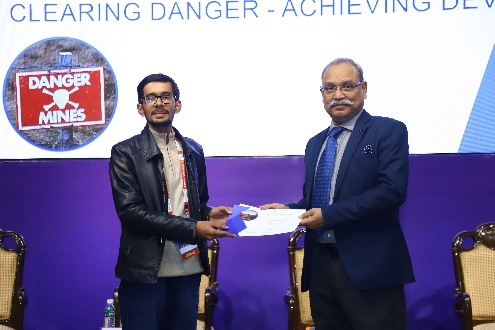
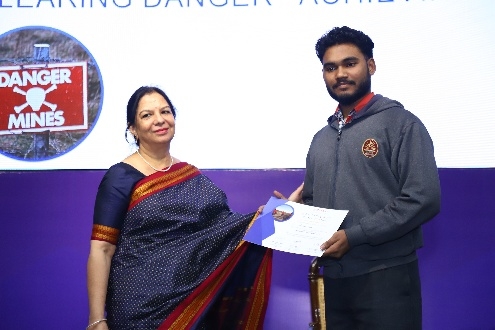
IIFOMAS Symposium on Mine Action – 14 Nov 2024
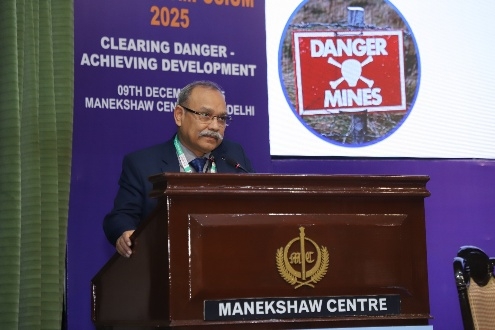 Welcome Address
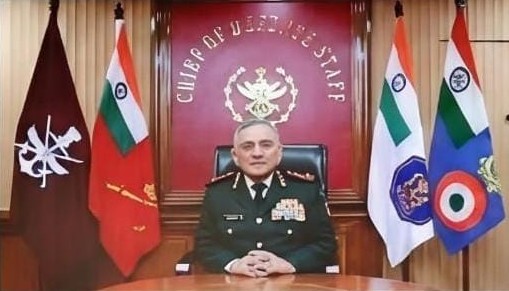 Inaugural Address
 Keynote Address
 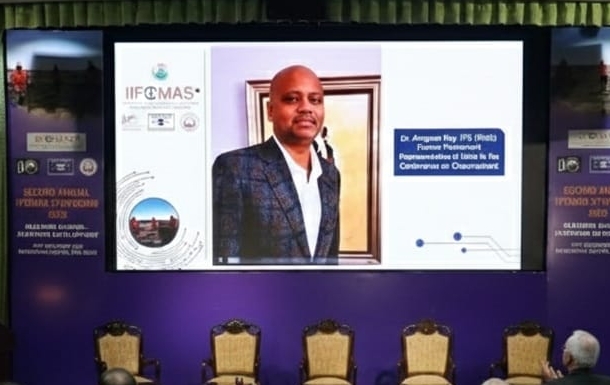 Ambassador Anupam Ray, IFS (Retd), Former Permanent Representative of India to the Conference on Disarmament, complimented Horizon and IIFOMAS for converting India’s technical and diplomatic experience into a practical, exportable capability. Drawing on his disarmament and diplomatic background, he emphasized the global demand for Indian skills in demining and commended the forum’s potential to grow into an influential international event that links policy, practice and diplomacy.
  Mr Paul Heslop, Senior Mine Action advisor, Resident Coordinator's office United Nations Ukraine, highlighted the funding and outcome challenge. With constrained global finance, Mine Action must demonstrate measurable impact (reopened schools, restored agriculture, economic benefit) rather than output metrics alone. He advocated for rapid exclusion of safe land using remote sensing and AI so that scarce clearance resources can be concentrated on genuinely hazardous areas, and warned that evolving delivery systems (e.g., drone-delivered munitions) require anticipatory adaptation in detection and clearance strategies.
  Expert Talk - An Expert Talk on “Danger to Development – Demining, UN Peacekeeping and Peacebuilding” was delivered by Amb Dinkar Srivastava (IFS Retd). Drawing upon extensive diplomatic and multilateral experience, the lecture highlighted the central role of demining in enabling peacebuilding, stabilisation and sustainable development. The address linked effective mine action directly to the success of UN peacekeeping operations, humanitarian access and long-term recovery in post-conflict environments.
 Clearing Land for Growth: From Contamination to Opportunity
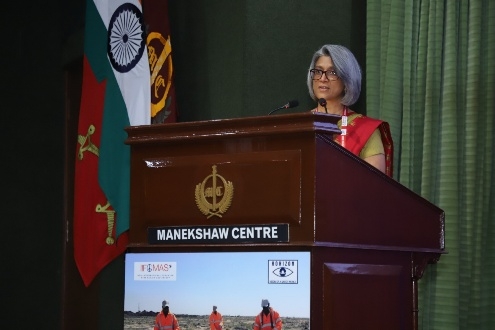 H.E. Ms Mahishini Colonne, Sri Lankan High Commissioner, traced Sri Lanka’s mine action journey from emergency post-conflict clearance to development-oriented recovery, highlighting lessons on national ownership, coordination mechanisms and residual contamination challenges. Highlighting India and Horizon Group’s contribution to mine action efforts in Sri Lanka, she called for India to partner with the mission to complete clearance operations and advance redevelopment initiatives in the affected regions.
 H.E. Lt Gen Carlos Rachimo (Retd), Director General, Angola National Demining Centre, highlighted the scale and persistence of mine and UXO contamination in Angola, underscoring the long-term economic and social costs of uncleared land decades after conflict.
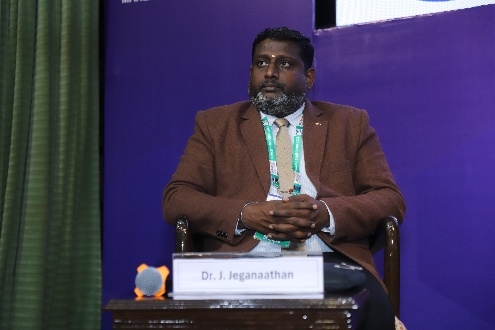 Prof Jagannathan, Jawaharlal Nehru University, emphasised the importance of planning mine action in parallel with reconstruction, rather than as a sequential activity, to maximise development outcomes and efficiency.
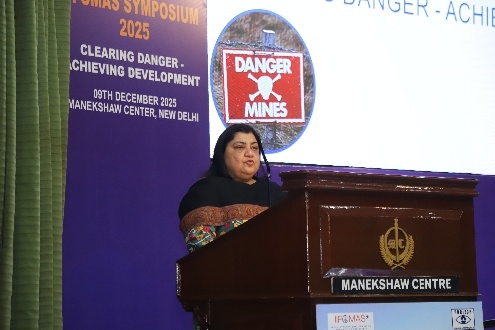 Smt Nutan Kapoor Mahawar, Acting Director General and Additional Secretary, Indian Council of World Affairs, outlined the international legal and normative frameworks governing landmines and UXOs. She highlighted India’s capacity to convene partners, provide training and offer demining expertise, while stressing the importance of strengthening national policies and inter-agency coordination.
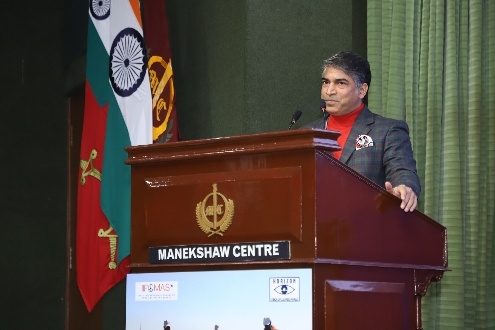 Mr Mayank Singh, Senior Assistant Editor, The New Indian Express was the Moderator. He positioned mine action as a humanitarian instrument of diplomacy, reinforcing India’s credibility through balanced security, development and humanitarian engagement.
 Shri Pankaj Kumar Singh, IPS, Former DG BSF and Former Deputy NSA, highlighted the evolving threat of IEDs in asymmetric and internal security contexts, stressing preparedness, institutional learning and international knowledge sharing.
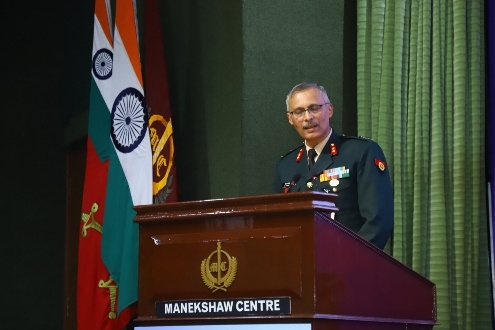 Maj Gen R.R. Bhat, DGCE, E-in-C Branch emphasised the Indian Armed Forces’ extensive experience in UN peacekeeping, engineering support and post-conflict stabilisation, and their potential role in training and capacity building.
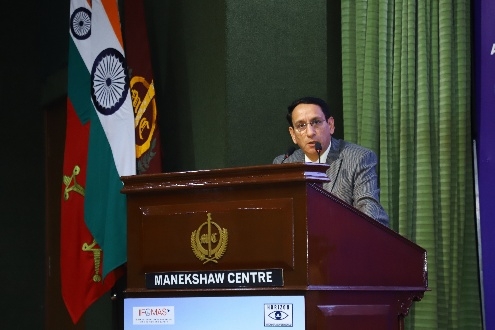 Col Badal Sheopuri (Retd) stressed that compassion in mine action must be reflected through survivor rehabilitation, prosthetics, livelihood restoration and social reintegration, placing affected communities at the centre of recovery.
 Col Navneet MP Mittal (Retd)highlighted the need for coherent national policy, inter-agency coordination and public–private partnerships to institutionalise India’s mine action outreach and align it with international cooperation and development goals.
 Lt Gen Arvind Walia, AVSM (Retd), Former Engineer-in-Chief, Indian Army and Moderator, set the context by emphasising that technology must complement—not replace—field expertise. He underscored the importance of operational relevance, reliability and scalability when adopting new technologies for mine action.
 Shri Satish Mehta, (IFS Retd) Bhagwan Mahaveer Viklang Sahayata Samiti (BMVSS – Jaipur Foot), highlighted transformative developments in prosthetic technologies, stressing their role in survivor rehabilitation, mobility restoration and social reintegration. He emphasised affordable, scalable solutions as a humanitarian imperative.
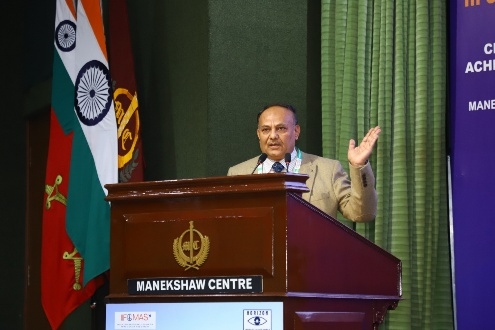 Col Sanjeev Kumar, SM (Retd), Kapri Corp, spoke on advancements in modern detection technologies, outlining improvements in accuracy, safety and efficiency through enhanced sensors and equipment designed for diverse operational environments.
 Mr Sanjeev Kumar, Navyug Infosolutions Pvt Ltd, discussed integrating advanced sensors with traditional demining training, highlighting how technology-enabled training can improve situational awareness, decision-making and operational safety without diluting core field skills.
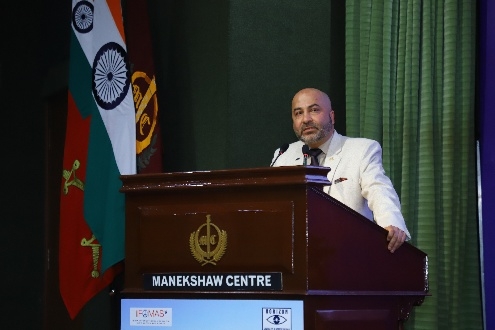 Col Umang Trehan (Retd), MKU, addressed modern approaches to enhancing safety in mine action, focusing on protective equipment, system integration and incremental innovations that reduce risk exposure for demining personnel.