The weaponisation of terrain through landmines in the Russia-Ukraine conflict creates a strategic-level risk that paralyses military manoeuvre and imposes long-term humanitarian and economic consequences. The current landmine action is essentially reactive, creating a research gap in proactive, predictive threat modelling to counter this asymmetric threat effectively. The research problem is the “fog of contamination”, which breaks down conventional Intelligence Preparation of the Battlefield (IPB), denying forces operational tempo and the initiative.
The objective of the research is to design and propose an AI-based framework to counter the landmine threat from reactive clearance to predictive threat dominance, thereby reestablishing the freedom of action and ensuring force protection. The methodology uses a mixed method approach, integrating machine learning models with operational doctrine analysis centres on developing a Common Operational Picture (COP) through a multidisciplinary approach by involving multiple intelligence data fusion (GEOINT, SIGINT, OSINT), specialised machine learning models, including Long Short-Term Memory (LSTM) networks for spatiotemporal forecasting and Convolutional Neural Networks (CNNs) for pattern recognition; and integration into a military Concept of Operation (CONOPS).
Preliminary findings suggest that such a system can detect high-probability threat areas, provide predictive route vulnerability analysis, and optimise the allocation of breaching and demining assets. The implications of the study are significant across strategic, tactical and operational levels. It shortens the Observe-Orient-Decide-Act (OODA) cycle, permitting proactive breaching and effect-based targeting of landmines. It maintains a clearance priority index to organise humanitarian demining post-conflict. The study specifies that AI-driven predictive analytics is crucial in countering landmine threats despite data integrity issues, hostile AI and ethical concerns.
Keywords: Predictive Analytics, Landmine Contamination, Russia-Ukraine Conflict, Artificial Intelligence, Asymmetric Warfare, Fog of Contamination.
Background: Threat Landscape in the Russia-Ukraine Conflict
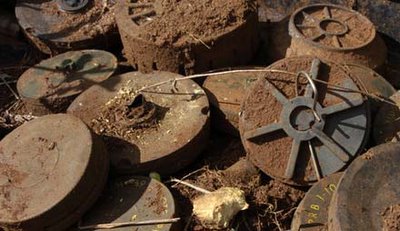
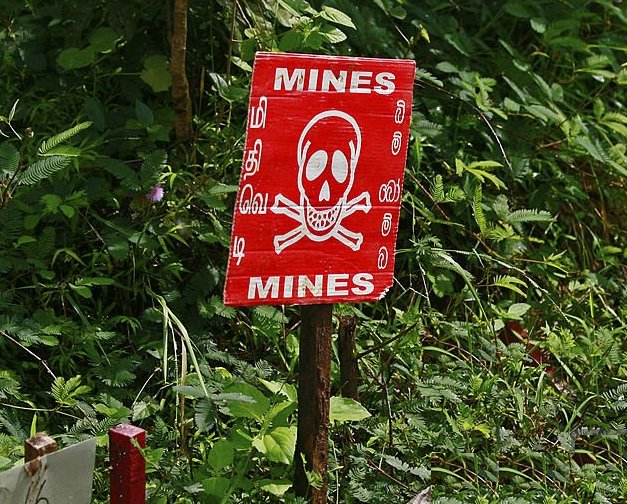
The conflict between Russia and Ukraine in 2022 redefined the nature of the threat assessment and articulated that the most crucial risks are posed from the engineered environment, unlike conventional war in high-intensity conflict. Russian forces have contaminated about 30% of Ukrainian territory, which is equal to 174,000 sq. km, with landmines and Explosive Remnants of War, thus creating a strategic-level weapon system designed to achieve operational paralysis and transform battlespace into a lethally contaminated area (Hryhorczuk et al., 2024). In some sense, this weaponisation of terrain is intended to function as an obstacle to deny, delay, and dictate the terms of engagement and, therefore, represents the worst landmine crisis since World War II, testing the principles of manoeuvre warfare (Hidden Killers 1994: The Global Landmine Crisis, 2009).
The net effect on the ground is one of ubiquitous area denial, wherein a series of complex, multi-layer obstacle belts featuring combinations of anti-personnel and anti-tank mines are reinforced with additional fortifications. This nonlinear battle space replaces clear front lines with a patchwork of controlled areas and precariously denied zones. The strategic implications of this approach are crippling: the Ukrainian Combined Arms Manoeuvre is greatly hindered (Dan Kaszeta, 2023). At the same time, armed operations must be channelled through predictable paths, imposing a heavy tempo-tax on offensive actions. By using cheap, mass-produced ammunition against expensive Ukrainian combat forces and Western-sourced equipment, the adversary effectively gave up territory in exchange for time (Khanduri, 2024).
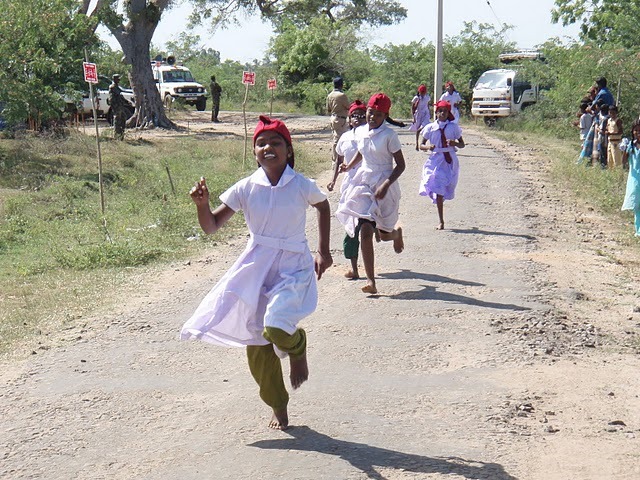
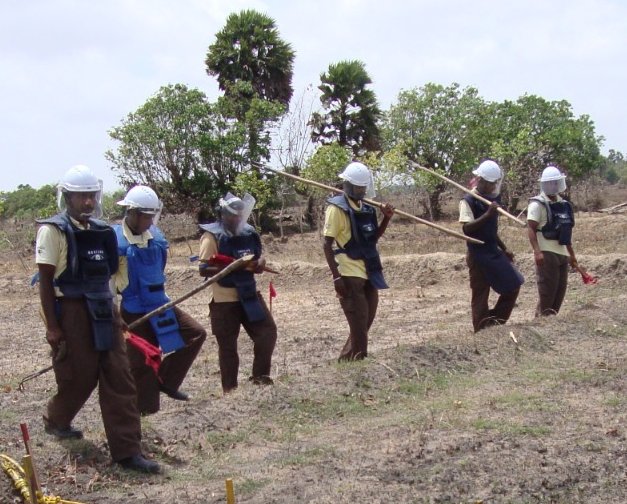
Beyond the immediate tactical stalling, this contamination has strategic-level consequences: it is a kind of economic warfare that cripples Ukraine’s economic resilience by rendering infrastructure and important agricultural land unusable for decades (Khrushch et al., 2023). The systematic deterioration of Ukraine’s operational reach and culminating point is used to gauge the counter mobility success of these minefields, in addition to the number of destroyed vehicles. Conventional breaching and demining capabilities are inherently reactive, personnel-intensive, and perilously slow, as they are overwhelmed by the sheer scale of the problem (Sedláček et al., 2024). The United Nations reports more than 1,000 civilian casualties annually from Explosive Remnants of War (ERW), an indictment of the weapon’s terrible post-conflict legacy and a second-order effect creating a humanitarian catastrophe that will persist for generations (Myanmar Humanitarian Fund, 2024). This operational environment’s pervasive “fog of contamination” represents a fundamental breakdown in our ability to conduct timely Intelligence Preparation of the Battlefield (IPB). It establishes the unavoidable necessity for Artificial Intelligence-driven decision-support systems to regain operational initiative and freedom of action by requiring a paradigm shift from reactive clearance to predictive threat modelling (Larue, 2019).
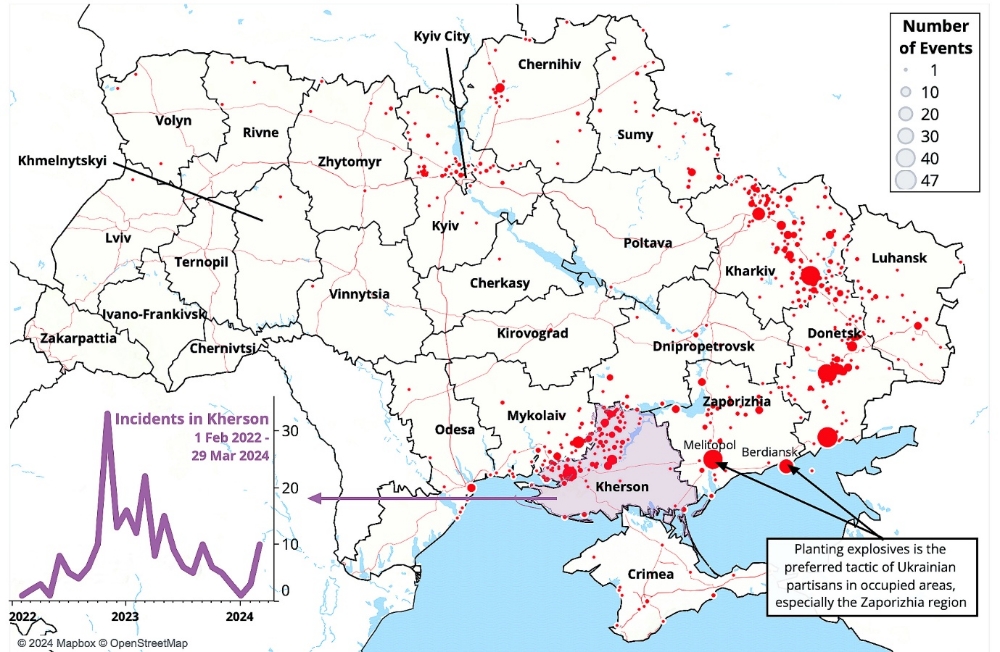
Picture. 1: Landmine and Remote Explosive Incidents in Ukraine 2022-2024
Source:
Nichita, G. (2024, April 26). The Growing Threat of Explosive Devices in Ukraine | ACLED Insight | ACLED. https://acleddata.com/brief/growing-threat-explosive-devices-ukraine-acled-insight
The Operational Environment: Asymmetric Challenges of the Landmine Threat:
The operational environment in Ukraine has modernised the pattern of land warfare strategy, turning what was considered a tactical defensive tool into a strategic asymmetric weapon. The landmine threats impose paralysis on the Ukrainian forces. The asymmetry is obvious in 3 domains, such as cost imposition, tempo control and the prolonged impact of battlefield utility (Miron & Thornton, 2025).
The core of this asymmetric challenge rests in a devastatingly efficient cost-exchange ratio: Russia deploys mass-produced, low-technology munitions, mostly Protivopekhotnaya Mina-1 (PFM-1) “Butterfly” anti-personnel mine and Tankovaya Mina-62 (TM-62) series anti-tank mines costing a few hundred dollars per unit to attrit and destroy high-value Ukrainian combat power, including Western-supplied main battle tanks, infantry fighting vehicles, and specialised engineering equipment (Landmine Use in Ukraine | Human Rights Watch, 2023). Each mine incident, however, triggers a cascade of secondary costs: medical evacuation and long-term care for casualties, recovery and repair of disabled vehicles, and the dedication of scarce, high-end demining teams and breaching assets to clear a path.(Olena Harmash, 2024) This creates a sustainable attrition model for Russia, which expends cheap, stockpiled munitions, while Ukraine and its allies exhaust significantly more valuable financial, material, and human resources. This is not a battle of attrition; it is a battle of economic endurance whereby the defender leverages minimal investment to impose maximum financial and operational costs on the attacker (L. Garcia & Colley, 2024).
The most immediate operational impact is the systematic denial of operational tempo. Thus, the Ukrainian forces, who indeed have been trained and equipped for agile Combined Arms Manoeuvre, get pushed into a very slow, methodical, and predictable breaching process. Anywhere there is a suspicion of minefields, advances must be halted while thorough zone reconnaissance and intentional breaching under fire are carried out (Watling, 2025). This stops an offensive momentum and gives the Russian forces crucial time to fortify positions, modify artillery fire plans and plan counterattacks. As a result, the minefield channels Ukrainian forces through pre-sighted kill zones while acting as a force multiplier for Russian artillery and defensive positions (Bhardwaj, 2025).
This erosion of initiative is a critical asymmetric effect-it cedes Ukraine’s potential for tactical and operational surprise, forcing its military to fight on the enemy’s terms. The constant threat transforms the OODA loop for Ukrainian commanders, standing for Observe, Orient, Decide, Act, from a cycle of advantage to one of caution and reaction, ceding the initiative fundamentally to the defender. In the context of ongoing conflict, Russia has weaponised terrain through acts of contamination of agricultural land and forests, as well as critical infrastructure, to ensure long-term economic and political consequences (Kawakami, 2022).
This process is a kind of economic warfare, wherein land, previously an asset, is turned into a liability that will impede recovery and the return of displaced populations for decades to come, even in the scenario of a Ukrainian military victory. Ongoing risks from landmines render post-conflict stability complex, as the territories liberated become a continuous drain on finances when large-scale clearing operations are to be expected. This is an asymmetric victory, where the low-tech weapon of landmines has strategic effects that endure. These challenges require sophisticated breaching technologies and an intelligence-driven approach to understand and mitigate the ubiquitous "fog of contamination" that affects operational performance in these theatres of operation (Dunias et al., 2024).
AI-Driven Predictive Analytics: Core Capabilities for the Modern Battlespace:
The asymmetric landmine threat demands a radical shift in our conceptualisation of battlespace awareness-from post-event documentation towards predictive dominance via AI. AI-driven predictive analytics is a combat multiplier that allows us to transition from conducting operations in a condition of perpetual surprise regarding contamination to executing our missions with forecasted threat awareness (Samyuktha et al., 2020). This depends upon a sophisticated technical architecture integrating numerous sources of intelligence into a single living geospatial product, called the Common Operational Picture, which forecasts the changing landmine threat (Kim et al., 2025). At the heart of the system is an integrated pipeline of multiple-Intelligence (multi-INT) data fusion, specialised machine learning models, and rigorous data engineering adapted to pierce the adversary’s tactical obfuscation and restore operational initiative to friendly forces.
This predictive capability is grounded in continuous intake and correlation of multi-source intelligence, or multi-INT. In this manner, a rich data lake is created upon which subsequent analytical models draw. Geospatial intelligence from high-resolution optical and synthetic aperture radar satellites provides critical baseline terrain analysis and persistent change detection capabilities against the ground disturbances typical of manual emplacement or artillery-scatter patterns (Dritsas et al., 2025). Signals Intelligence intercepts of enemy engineer communications and logistics traffic supply unmatched temporal and intent-based data, showing mining schedules and unit locations. To this is added Open-Source Intelligence (OSINT), in which Natural Language Processing algorithms comb through social media and local reports for crowd-sourced hazard identification, while tactical unit spot reports fed immediately through Battle Management Systems provide ground truth for model validation. It is in this fused data environment that the raw material of predictive insight is born (Barnawi et al., 2024).
The cognitive engine applies a particular machine learning model, known as Long Short-Term Memory networks, for spatiotemporal forecasting of adversary artillery and frontline movement to find the mine contamination zones (Noor et al., 2022). Models like Tabular Network (TabNet) combine temporal data with static features such as terrain to predict high-probability threat areas for proactive route denial and targeting of mine-laying assets. Simultaneously, Convolutional Neural Networks (CNNs) and classifiers like Random Forest and Extreme Gradient Boost (XGBoost) can be used for pattern and munition classification in imagery, which discriminates between different types of mines and allows one to infer adversary tactics (Galán et al., 2022).
Graph Neural Network analyses the battlespace as a navigational network, evaluating dynamic Mine Threat Probability Scores to identify the safest paths and optimal breach points for engineers, considering the Common Operational Picture (COP), terrain, and adversary’s position. Fundamental to this system is a strong focus on data engineering necessary to maintain model accuracy and operational reliability, including using techniques like Synthetic Minority Over-sampling Technique (SMOTE) for creating balanced datasets that resolve blind spots in conflict zone data (Tan et al., 2019). All data management will occur within a centralised data lake and comprehensive Machine Learning Operations (MLOps) framework, thus enabling version control, reproducibility, and adaptation to evolving adversary tactics (Verma & Santhanam, 2024). This system converts what is today a complex and dangerous battlespace into a manageable situation in which risks are understood and opportunities identified, restoring key warfighting principles of speed, surprise, and decision dominance for manoeuvring forces.
Applications in Landmine Mitigation and Security Operations: A Military-centric CONOPs:
The military Concept of Operations (CONOPs) and the AI-driven Predictive Analytics can be integrated to have an operational outcome on the battlefield (Alphonso & Banubakode, 2025). When troops are manoeuvring, this integration will condense the OODA cycle, shifting the COP from the static intelligence data into a dynamic tool for mission command (Johnson, 2022). This can be broken down into 3 interconnected phases, such as pre-operational strategic planning, real-time tactical implementation and post-conflict stabilisation. The Real-time Data Tasking and Fusion (RDTF) framework can be used to achieve operational success at every stage of the conflict (Laoreti et al., 2008).
During pre-operational planning, the COP serves as the foundational layer for the Military Decision-Making Process (MDMP). At the operational level, the COP informs Effects-Based Targeting against an enemy’s counter-mobility system; by defining patterns in minefield emplacement and logistics, the commander can prioritise strikes against artillery units specialising in scatterable mines, engineer supply depots, and key transportation routes for mine-laying assets (Gopal, 2021). At the same time, in terms of manoeuvre planning, AI-driven Route Vulnerability Analysis provides corps and brigade staff with predictive corridor assessments, creating a ranked list of axes of advance based on a synthesised threat score that incorporates mine density, terrain trafficability, and enemy direct fire coverage. It enables the pre-emptive designation of Predicted Breach Lanes (FM-90-13-01 Combined Arms Breaching Operations, 1993), allowing detailed tactical planning and the pre-positioning of dedicated breaching assets such as Mine-Clearing Line Charge (MICLICs) and armoured engineer vehicles.
These dynamics have altered the operations from hasty to deliberate, pre-planned actions, essentially influencing the risk assessment on the battlefield. The Concept of Operations enables a dynamic, continuously updated COP at the tactical level, confirming the integration of the Battle Management System (BMS) and the COP at the battalion and company levels. This facilitates the commander to see the contamination landscape in real time while manoeuvring (Chhabria et al., 2022). Units will utilise Unmanned Aerial Vehicles (UAVs) for reconnaissance of risk zones, with images processed by AI models to authorise and refine the COP. This approach establishes a closed-loop sensor to breach the ecosystem and attains Predictive Force Protection by automating alerts for units manoeuvring to high-risk zones (Tang et al., 2019). The real-time information will help to re-route the humanitarian corridors to preserve safe evacuation routes for civilians as the situation changes. In the post-conflict phase, AI is used to aid national recovery; COP is a critical tool for Effect-Based Clearance, integrating contaminant data with population density, agricultural value, and infrastructure to establish a Clearance Priority Index (Bunker et al., 2014).
Challenges:
The AI-driven predictive analytics systems in military operations suffer from technical failures and dependencies that may have complex tactical and strategic consequences. These challenges can be split into 3 categories, such as: risk associated with data integrity and fusion, adversarial AI tactical countering, and ethical challenges of military use of AI (Azad, 2024). Despite these categories, the utilisation, development and deployment of AI systems for military purposes is not discouraged; it necessitates ensuring the rigorous safeguard mechanisms to maintain operational effectiveness. Vulnerabilities arise because of the "garbage in, garbage out" concept, pointing out how precision and data fusion affect predictive reliability (Márquez-Díaz, 2024). Challenges such as inconsistent frontline reporting, biased historical data, lack of data sharing between allies spoil the training environment of the AI algorithms. This condition is further deteriorated by surveillance gaps in adversary’s territories where Intelligence, Surveillance, and Reconnaissance (ISR) coverage is limited, resulting in strategic blind spots. The task of integrating multi-intelligence information by combining satellite imagery, signal intelligence, human reports, etc, poses technical barriers (Toutoungi & Sy, 2025). Errors in the intelligence will cause heavy operational failures, undesirable incidents like accidental fire of own troops, poor asset allocation, etc.
Furthermore, advanced adversaries are using counter-AI techniques to undermine predictive models in military contexts. The Russian forces can use misinformation to confuse the AI systems, and the landmine zones become undetectable and resulting in a “fog of data” that leads to strategic-ethical challenges like human losses by the AI-driven decisions. There is a need for clear Human in the Loop (HITL) protocols and Rules of Engagement (ROE). Issues of automation bias may suppress critical human intuition, while algorithmic bias due to imbalanced datasets may be used to create inequality in the distribution of resources, reinforcing enemy narratives (Turgunov et al., 2025). Failure to take action on these vulnerabilities could render AI inoperable in the military domain and might result in significant consequences that far outweigh the benefits of the technology.
Conclusion:
Landmine contamination of terrain in Ukraine is among today’s major challenges to achieving manoeuvre dominance through the weaponisation of terrain, with long-term strategic implications. This analysis underscores that AI-driven predictive analytics is a necessary element to convert the dangerous landscape into a manageable operational domain. With the use of machine learning models, spatiotemporal forecasting with LSTM networks and pattern classification using CNNs, integrated into military concepts of operation, CONOPS, it is possible to achieve proactive threat management rather than simple landmine clearance.
However, effectiveness ensues from the addressing of data integrity, evolving adversarial strategies, and the complex ethical-legal terrain associated with automated decision-making. The recommendation of the research is to establish a Joint Explosive Hazard Prediction Centre should consolidate Artificial Intelligence/Machine Learning (AI/ML) operations related to mine threat analysis and involve a multidisciplinary team comprising intelligence officers, data scientists, and legal experts. Major activities such as data integration, distribution of actionable predictive analytics and model training across the military domain. The Human in the Loop protocol is essential to follow to ensure the military response and the decisions are revised by humans, not merely AI algorithms.
A Bias Testing & Mitigation Program should be established for the Joint Explosive Hazard Prediction Centre (JEHPC), aiming at regular auditing, adversarial debiasing, and synthetic data creation to preserve ethical and objective practices. North Atlantic Treaty Organisation (NATO) and European Union (EU) standardisation of data protocols is essential for secure information exchange and improving predictive intelligence among allies. AI is identified as a key transformation in modern combat, enabling a transformation from reactive to proactive military operations across physical and digital domains.
About the Author
Bill Christopher Arputharaj is a Research Scholar affiliated with the Department of Strategic Technologies, School of National Security Studies, at the Central University of Gujarat, Vadodara Campus, Gujarat, India. His academic work is situated within the broader field of strategic technologies and national security studies.
References:
Alphonso, E., & Banubakode, D. A. (2025). Integration of Artificial Intelligence into Military Operations: A Kill Chain Perspective. Vol (6)(Issue (6)), 8.
Azad, N. (2024, February 9). DevOps Challenges and Risk Mitigation Strategies by DevOps Professionals Teams | SpringerLink. https://link.springer.com/chapter/10.1007/978-3-031-53227-6_26
Barnawi, A., Kumar, K., Kumar, N., Alzahrani, B., & Almansour, A. (2024). A Deep Learning Approach for Landmines Detection Based on Airborne Magnetometry Imaging and Edge Computing. CMES - Computer Modeling in Engineering and Sciences, 139(2), 2117–2137. https://doi.org/10.32604/cmes.2023.044184
Bhardwaj, V. (2025, November 22). Lessons from the Battlefield: How Russia Built the Most Lethal Battlefield Fire System@Vinod73. Medium. https://capt-vinod.medium.com/lessons-from-the-battlefield-how-russia-built-the-most-lethal-battlefield-fire-system-vinod73-19138ee04f0f
Bunker, D., Levine, L., & Woody, C. (2014, July 20). Repertoires of collaboration for common operating pictures of disasters and extreme events | Information Systems Frontiers. https://link.springer.com/article/10.1007/s10796-014-9515-4
Chhabria, V., Choy, K.-W., Sood, R., & Whiteman, R. (2022, June 21). The power from digitizing operations management systems | McKinsey. https://www.mckinsey.com/capabilities/operations/our-insights/new-operations-management-systems-for-a-digital-world
Dan Kaszeta. (2023, October 27). Countering Land Mines and UXO: Old Threats and New Frontiers in Ukraine. European Security & Defence. https://euro-sd.com/2023/10/articles/34771/countering-land-mines-and-uxo-old-threats-and-new-frontiers-in-ukraine/
Dritsas, E., Trigka, M., Dritsas, E., & Trigka, M. (2025). Remote Sensing and Geospatial Analysis in the Big Data Era: A Survey. Remote Sensing, 17(3). https://doi.org/10.3390/rs17030550
Dunias, N., Jensen, S., Clarke, E., Meryon, R., Kirk, H., & Giugovaz, M. (2024, September 10). From Economic Recovery to Global Food Security: The Urgent Need to Demine Ukraine. Tony Blair Institute for Global Change. https://institute.global/insights/geopolitics-and-security/the-urgent-need-to-demine-ukraine
FM-90-13-01 Combined Arms Breaching Operations. (1993). https://www.bits.de/NRANEU/others/amd-us-archive/FM90-13-1%2891%29.pdf
Galán, J. J., Carrasco, R. A., LaTorre, A., Galán, J. J., Carrasco, R. A., & LaTorre, A. (2022). Military Applications of Machine Learning: A Bibliometric Perspective. Mathematics, 10(9). https://doi.org/10.3390/math10091397
Gopal, V. (2021). Joint Waveform Interoperability System (JOWIS) Common Tactical Data Links For The Force Of 21st Century – CENJOWS. https://cenjows.in/publications/joint-waveform-interoperability-system-jowis-common-tactical-data-links-for-the-force-of-21st-century/
Hidden Killers 1994: The Global Landmine Crisis. (2009, January 20). U.S Department of State. https://1997-2001.state.gov/global/arms/rpt_9401_demine_ch1.html
Hryhorczuk, D., Levy, B. S., Prodanchuk, M., Kravchuk, O., Bubalo, N., Hryhorczuk, A., & Erickson, T. B. (2024). The environmental health impacts of Russia’s war on Ukraine. Journal of Occupational Medicine and Toxicology (London, England), 19, 1. https://doi.org/10.1186/s12995-023-00398-y
Johnson, J. (2022, July 25). Automating the OODA Loop in the Age of AI. Nuclear Network. https://nuclearnetwork.csis.org/automating-the-ooda-loop-in-the-age-of-ai/
Kawakami, Y. (2022, May 19). Dissecting Russia’s Operational Art in UkraineHow Disjointed Ends, Ways, and Means Have Shackled Moscow’s Operational Warfare | List of Articles. International Information Network Analysis | SPF. https://www.spf.org/iina/en/articles/kawakami_02.html
Khanduri, C. K. (2024). Lessons from the Russia-Ukraine Conflict and Implications for Mechanised Operations in the Indian Context. https://usiofindia.org/pdf/USI%20Journal%20-%20Jan-March%202024%20Revised-126-137.pdf
Khrushch, O., Moskalets, V., Fedyk, O., Karpyuk, Y., Hasiuk, M., Ivantsev, N., Ivantsev, L., & Arjjumend, H. (2023). Environmental and Psychological Effects of Russian War in Ukraine. Grassroots Journal of Natural Resources, 6, 37–84. https://doi.org/10.33002/nr2581.6853.060103
Kim, J.-H., Kwon, G.-R., Kim, J.-H., & Kwon, G.-R. (2025). Image-Level Anti-Personnel Landmine Detection Using Deep Learning in Long-Wave Infrared Images. Applied Sciences, 15(15). https://doi.org/10.3390/app15158613
L. Garcia, R., & Colley, C. (2024, November 13). Russian Minefield Tactics Pose Challenge to Mobility. Red Diamond. https://g2webcontent.z2.web.core.usgovcloudapi.net/OEE/Red%20Diamond/TRADOC_13NOV2024_RUS_Minefield_Tactics_Mobility_Garcia_Colley.pdf
Landmine Use in Ukraine | Human Rights Watch. (2023, June 13). https://www.hrw.org/news/2023/06/13/landmine-use-ukraine
Laoreti, S., Renzi, D., Parisi, R., & Uncini, A. (2008). Data Fusion Framework: Concurrent architecture for real-time processing. IJICT, 1, 424–436. https://doi.org/10.1504/IJICT.2008.024013
Larue, J. B. (2019). Automating Intelligence Preparation of the Battlespace: An Enabling Concept For Intelligence [Dissertation, United States Marine Corps Command and Staff College]. https://apps.dtic.mil/sti/trecms/pdf/AD1177305.pdf
Márquez-Díaz, J. E. (2024). Benefits and Challenges of Military Artificial Intelligence in the Field of Defense. Computación y Sistemas, 28(2), 309–323. https://doi.org/10.13053/cys-28-2-4684
Miron, M., & Thornton, R. (2025, October 3). European countries are now turning to landmines to create new deadly defensive barriers from Russia. The Conversation. https://doi.org/10.64628/AB.hn3td4qtt
Myanmar Humanitarian Fund. (2024, May 31). United Nations Office for the Coordination of Humanitarian Affairs. https://onegms.unocha.org/pubdocs/Allocationsdocs/MM-AllocDocs_2024_544_972.pdf#:~:text=In%202023%2C%20there%20was%20a%20staggering%20surge,on%20the%20390%20casualties%20recorded%20in%202022.
Noor, F., Haq, S., Rakib, M., Ahmed, T., Jamal, Z., Siam, Z. S., Hasan, R. T., Adnan, M. S. G., Dewan, A., Rahman, R. M., Noor, F., Haq, S., Rakib, M., Ahmed, T., Jamal, Z., Siam, Z. S., Hasan, R. T., Adnan, M. S. G., Dewan, A., & Rahman, R. M. (2022). Water Level Forecasting Using Spatiotemporal Attention-Based Long Short-Term Memory Network. Water, 14(4). https://doi.org/10.3390/w14040612
Olena Harmash. (2024, September 10). Landmines cost Ukraine $11 bln in GDP each year, says report | Reuters. https://www.reuters.com/world/europe/landmines-cost-ukraine-11-bln-gdp-each-year-says-report-2024-09-10/
Samyuktha, Vigneswari, & Swedha. (2020, June). (PDF) Detection and Demining of Landmines using Artificial Intelligence. https://www.researchgate.net/publication/352973633_Detection_and_Demining_of_Landmines_using_Artificial_Intelligence
Sedláček, M., Dohnal, F., Ivan, J., & Šustr, M. (2024). Possible approaches to assessing terrain mobility after the effects of artillery munition. Cogent Social Sciences, 10(1), 2368096. https://doi.org/10.1080/23311886.2024.2368096
Tan, X., Su, S., Huang, Z., Guo, X., Zuo, Z., Sun, X., Li, L., Tan, X., Su, S., Huang, Z., Guo, X., Zuo, Z., Sun, X., & Li, L. (2019). Wireless Sensor Networks Intrusion Detection Based on SMOTE and the Random Forest Algorithm. Sensors, 19(1). https://doi.org/10.3390/s19010203
Tang, J., Sun, J., & Lao, S. (2019, April 24). Optimized artificial potential field algorithm to multi-unmanned aerial vehicle coordinated trajectory planning and collision avoidance in three-dimensional environment—Jun Tang, Jiayi Sun, Cong Lu, Songyang Lao, 2019. https://journals.sagepub.com/doi/10.1177/0954410019844434
Toutoungi, A., & Sy, M. (2025, July 31). Interface | Intellectual property (IP) in defence contracting: The most important issue for defence tech companies? https://www.taylorwessing.com/de/interface/2025/defence-tech/intellectual-property-in-defence-contracting
Turgunov, J., Rakhimova, M., Saidov, B., Kholmatova, D., & Sd, D. (2025). HUMAN-IN-THE-LOOP SYSTEMS FOR ETHICAL AI. https://www.researchgate.net/publication/393802734_HUMAN-IN-THE-LOOP_SYSTEMS_FOR_ETHICAL_AI
Verma, D. C., & Santhanam, P. (2024, April 22). MLOps at the Edge in DDIL Environments. SPIE Defense + Commercial Sensing. https://doi.org/10.1117/12.3013300
Watling, J. (2025, November 28). Emergent Approaches to Combined Arms Manoeuvre in Ukraine. Royal United Service Institute. https://www.rusi.org/explore-our-research/publications/insights-papers/emergent-approaches-combined-arms-manoeuvre-ukraineAbstract:
The weaponisation of terrain through landmines in the Russia-Ukraine conflict creates a strategic-level risk that paralyses military manoeuvre and imposes long-term humanitarian and economic consequences. The current landmine action is essentially reactive, creating a research gap in proactive, predictive threat modelling to counter this asymmetric threat effectively. The research problem is the “fog of contamination”, which breaks down conventional Intelligence Preparation of the Battlefield (IPB), denying forces operational tempo and the initiative.
The objective of the research is to design and propose an AI-based framework to counter the landmine threat from reactive clearance to predictive threat dominance, thereby reestablishing the freedom of action and ensuring force protection. The methodology uses a mixed method approach, integrating machine learning models with operational doctrine analysis centres on developing a Common Operational Picture (COP) through a multidisciplinary approach by involving multiple intelligence data fusion (GEOINT, SIGINT, OSINT), specialised machine learning models, including Long Short-Term Memory (LSTM) networks for spatiotemporal forecasting and Convolutional Neural Networks (CNNs) for pattern recognition; and integration into a military Concept of Operation (CONOPS).
Preliminary findings suggest that such a system can detect high-probability threat areas, provide predictive route vulnerability analysis, and optimise the allocation of breaching and demining assets. The implications of the study are significant across strategic, tactical and operational levels. It shortens the Observe-Orient-Decide-Act (OODA) cycle, permitting proactive breaching and effect-based targeting of landmines. It maintains a clearance priority index to organise humanitarian demining post-conflict. The study specifies that AI-driven predictive analytics is crucial in countering landmine threats despite data integrity issues, hostile AI and ethical concerns.
Keywords: Predictive Analytics, Landmine Contamination, Russia-Ukraine Conflict, Artificial Intelligence, Asymmetric Warfare, Fog of Contamination.
Background: Threat Landscape in the Russia-Ukraine Conflict
The conflict between Russia and Ukraine in 2022 redefined the nature of the threat assessment and articulated that the most crucial risks are posed from the engineered environment, unlike conventional war in high-intensity conflict. Russian forces have contaminated about 30% of Ukrainian territory, which is equal to 174,000 sq. km, with landmines and Explosive Remnants of War, thus creating a strategic-level weapon system designed to achieve operational paralysis and transform battlespace into a lethally contaminated area (Hryhorczuk et al., 2024). In some sense, this weaponisation of terrain is intended to function as an obstacle to deny, delay, and dictate the terms of engagement and, therefore, represents the worst landmine crisis since World War II, testing the principles of manoeuvre warfare (Hidden Killers 1994: The Global Landmine Crisis, 2009).
The net effect on the ground is one of ubiquitous area denial, wherein a series of complex, multi-layer obstacle belts featuring combinations of anti-personnel and anti-tank mines are reinforced with additional fortifications. This nonlinear battle space replaces clear front lines with a patchwork of controlled areas and precariously denied zones. The strategic implications of this approach are crippling: the Ukrainian Combined Arms Manoeuvre is greatly hindered (Dan Kaszeta, 2023). At the same time, armed operations must be channelled through predictable paths, imposing a heavy tempo-tax on offensive actions. By using cheap, mass-produced ammunition against expensive Ukrainian combat forces and Western-sourced equipment, the adversary effectively gave up territory in exchange for time (Khanduri, 2024).
Beyond the immediate tactical stalling, this contamination has strategic-level consequences: it is a kind of economic warfare that cripples Ukraine’s economic resilience by rendering infrastructure and important agricultural land unusable for decades (Khrushch et al., 2023). The systematic deterioration of Ukraine’s operational reach and culminating point is used to gauge the counter mobility success of these minefields, in addition to the number of destroyed vehicles. Conventional breaching and demining capabilities are inherently reactive, personnel-intensive, and perilously slow, as they are overwhelmed by the sheer scale of the problem (Sedláček et al., 2024). The United Nations reports more than 1,000 civilian casualties annually from Explosive Remnants of War (ERW), an indictment of the weapon’s terrible post-conflict legacy and a second-order effect creating a humanitarian catastrophe that will persist for generations (Myanmar Humanitarian Fund, 2024). This operational environment’s pervasive “fog of contamination” represents a fundamental breakdown in our ability to conduct timely Intelligence Preparation of the Battlefield (IPB). It establishes the unavoidable necessity for Artificial Intelligence-driven decision-support systems to regain operational initiative and freedom of action by requiring a paradigm shift from reactive clearance to predictive threat modelling (Larue, 2019).
Picture. 1: Landmine and Remote Explosive Incidents in Ukraine 2022-2024
Source:
Nichita, G. (2024, April 26). The Growing Threat of Explosive Devices in Ukraine | ACLED Insight | ACLED. https://acleddata.com/brief/growing-threat-explosive-devices-ukraine-acled-insight
The Operational Environment: Asymmetric Challenges of the Landmine Threat:
The operational environment in Ukraine has modernised the pattern of land warfare strategy, turning what was considered a tactical defensive tool into a strategic asymmetric weapon. The landmine threats impose paralysis on the Ukrainian forces. The asymmetry is obvious in 3 domains, such as cost imposition, tempo control and the prolonged impact of battlefield utility (Miron & Thornton, 2025).
The core of this asymmetric challenge rests in a devastatingly efficient cost-exchange ratio: Russia deploys mass-produced, low-technology munitions, mostly Protivopekhotnaya Mina-1 (PFM-1) “Butterfly” anti-personnel mine and Tankovaya Mina-62 (TM-62) series anti-tank mines costing a few hundred dollars per unit to attrit and destroy high-value Ukrainian combat power, including Western-supplied main battle tanks, infantry fighting vehicles, and specialised engineering equipment (Landmine Use in Ukraine | Human Rights Watch, 2023). Each mine incident, however, triggers a cascade of secondary costs: medical evacuation and long-term care for casualties, recovery and repair of disabled vehicles, and the dedication of scarce, high-end demining teams and breaching assets to clear a path.(Olena Harmash, 2024) This creates a sustainable attrition model for Russia, which expends cheap, stockpiled munitions, while Ukraine and its allies exhaust significantly more valuable financial, material, and human resources. This is not a battle of attrition; it is a battle of economic endurance whereby the defender leverages minimal investment to impose maximum financial and operational costs on the attacker (L. Garcia & Colley, 2024).
The most immediate operational impact is the systematic denial of operational tempo. Thus, the Ukrainian forces, who indeed have been trained and equipped for agile Combined Arms Manoeuvre, get pushed into a very slow, methodical, and predictable breaching process. Anywhere there is a suspicion of minefields, advances must be halted while thorough zone reconnaissance and intentional breaching under fire are carried out (Watling, 2025). This stops an offensive momentum and gives the Russian forces crucial time to fortify positions, modify artillery fire plans and plan counterattacks. As a result, the minefield channels Ukrainian forces through pre-sighted kill zones while acting as a force multiplier for Russian artillery and defensive positions (Bhardwaj, 2025).
This erosion of initiative is a critical asymmetric effect-it cedes Ukraine’s potential for tactical and operational surprise, forcing its military to fight on the enemy’s terms. The constant threat transforms the OODA loop for Ukrainian commanders, standing for Observe, Orient, Decide, Act, from a cycle of advantage to one of caution and reaction, ceding the initiative fundamentally to the defender. In the context of ongoing conflict, Russia has weaponised terrain through acts of contamination of agricultural land and forests, as well as critical infrastructure, to ensure long-term economic and political consequences (Kawakami, 2022).
This process is a kind of economic warfare, wherein land, previously an asset, is turned into a liability that will impede recovery and the return of displaced populations for decades to come, even in the scenario of a Ukrainian military victory. Ongoing risks from landmines render post-conflict stability complex, as the territories liberated become a continuous drain on finances when large-scale clearing operations are to be expected. This is an asymmetric victory, where the low-tech weapon of landmines has strategic effects that endure. These challenges require sophisticated breaching technologies and an intelligence-driven approach to understand and mitigate the ubiquitous "fog of contamination" that affects operational performance in these theatres of operation (Dunias et al., 2024).
AI-Driven Predictive Analytics: Core Capabilities for the Modern Battlespace:
The asymmetric landmine threat demands a radical shift in our conceptualisation of battlespace awareness-from post-event documentation towards predictive dominance via AI. AI-driven predictive analytics is a combat multiplier that allows us to transition from conducting operations in a condition of perpetual surprise regarding contamination to executing our missions with forecasted threat awareness (Samyuktha et al., 2020). This depends upon a sophisticated technical architecture integrating numerous sources of intelligence into a single living geospatial product, called the Common Operational Picture, which forecasts the changing landmine threat (Kim et al., 2025). At the heart of the system is an integrated pipeline of multiple-Intelligence (multi-INT) data fusion, specialised machine learning models, and rigorous data engineering adapted to pierce the adversary’s tactical obfuscation and restore operational initiative to friendly forces.
This predictive capability is grounded in continuous intake and correlation of multi-source intelligence, or multi-INT. In this manner, a rich data lake is created upon which subsequent analytical models draw. Geospatial intelligence from high-resolution optical and synthetic aperture radar satellites provides critical baseline terrain analysis and persistent change detection capabilities against the ground disturbances typical of manual emplacement or artillery-scatter patterns (Dritsas et al., 2025). Signals Intelligence intercepts of enemy engineer communications and logistics traffic supply unmatched temporal and intent-based data, showing mining schedules and unit locations. To this is added Open-Source Intelligence (OSINT), in which Natural Language Processing algorithms comb through social media and local reports for crowd-sourced hazard identification, while tactical unit spot reports fed immediately through Battle Management Systems provide ground truth for model validation. It is in this fused data environment that the raw material of predictive insight is born (Barnawi et al., 2024).
The cognitive engine applies a particular machine learning model, known as Long Short-Term Memory networks, for spatiotemporal forecasting of adversary artillery and frontline movement to find the mine contamination zones (Noor et al., 2022). Models like Tabular Network (TabNet) combine temporal data with static features such as terrain to predict high-probability threat areas for proactive route denial and targeting of mine-laying assets. Simultaneously, Convolutional Neural Networks (CNNs) and classifiers like Random Forest and Extreme Gradient Boost (XGBoost) can be used for pattern and munition classification in imagery, which discriminates between different types of mines and allows one to infer adversary tactics (Galán et al., 2022).
Graph Neural Network analyses the battlespace as a navigational network, evaluating dynamic Mine Threat Probability Scores to identify the safest paths and optimal breach points for engineers, considering the Common Operational Picture (COP), terrain, and adversary’s position. Fundamental to this system is a strong focus on data engineering necessary to maintain model accuracy and operational reliability, including using techniques like Synthetic Minority Over-sampling Technique (SMOTE) for creating balanced datasets that resolve blind spots in conflict zone data (Tan et al., 2019). All data management will occur within a centralised data lake and comprehensive Machine Learning Operations (MLOps) framework, thus enabling version control, reproducibility, and adaptation to evolving adversary tactics (Verma & Santhanam, 2024). This system converts what is today a complex and dangerous battlespace into a manageable situation in which risks are understood and opportunities identified, restoring key warfighting principles of speed, surprise, and decision dominance for manoeuvring forces.
Applications in Landmine Mitigation and Security Operations: A Military-centric CONOPs:
The military Concept of Operations (CONOPs) and the AI-driven Predictive Analytics can be integrated to have an operational outcome on the battlefield (Alphonso & Banubakode, 2025). When troops are manoeuvring, this integration will condense the OODA cycle, shifting the COP from the static intelligence data into a dynamic tool for mission command (Johnson, 2022). This can be broken down into 3 interconnected phases, such as pre-operational strategic planning, real-time tactical implementation and post-conflict stabilisation. The Real-time Data Tasking and Fusion (RDTF) framework can be used to achieve operational success at every stage of the conflict (Laoreti et al., 2008).
During pre-operational planning, the COP serves as the foundational layer for the Military Decision-Making Process (MDMP). At the operational level, the COP informs Effects-Based Targeting against an enemy’s counter-mobility system; by defining patterns in minefield emplacement and logistics, the commander can prioritise strikes against artillery units specialising in scatterable mines, engineer supply depots, and key transportation routes for mine-laying assets (Gopal, 2021). At the same time, in terms of manoeuvre planning, AI-driven Route Vulnerability Analysis provides corps and brigade staff with predictive corridor assessments, creating a ranked list of axes of advance based on a synthesised threat score that incorporates mine density, terrain trafficability, and enemy direct fire coverage. It enables the pre-emptive designation of Predicted Breach Lanes (FM-90-13-01 Combined Arms Breaching Operations, 1993), allowing detailed tactical planning and the pre-positioning of dedicated breaching assets such as Mine-Clearing Line Charge (MICLICs) and armoured engineer vehicles.
These dynamics have altered the operations from hasty to deliberate, pre-planned actions, essentially influencing the risk assessment on the battlefield. The Concept of Operations enables a dynamic, continuously updated COP at the tactical level, confirming the integration of the Battle Management System (BMS) and the COP at the battalion and company levels. This facilitates the commander to see the contamination landscape in real time while manoeuvring (Chhabria et al., 2022). Units will utilise Unmanned Aerial Vehicles (UAVs) for reconnaissance of risk zones, with images processed by AI models to authorise and refine the COP. This approach establishes a closed-loop sensor to breach the ecosystem and attains Predictive Force Protection by automating alerts for units manoeuvring to high-risk zones (Tang et al., 2019). The real-time information will help to re-route the humanitarian corridors to preserve safe evacuation routes for civilians as the situation changes. In the post-conflict phase, AI is used to aid national recovery; COP is a critical tool for Effect-Based Clearance, integrating contaminant data with population density, agricultural value, and infrastructure to establish a Clearance Priority Index (Bunker et al., 2014).
Challenges:
The AI-driven predictive analytics systems in military operations suffer from technical failures and dependencies that may have complex tactical and strategic consequences. These challenges can be split into 3 categories, such as: risk associated with data integrity and fusion, adversarial AI tactical countering, and ethical challenges of military use of AI (Azad, 2024). Despite these categories, the utilisation, development and deployment of AI systems for military purposes is not discouraged; it necessitates ensuring the rigorous safeguard mechanisms to maintain operational effectiveness. Vulnerabilities arise because of the "garbage in, garbage out" concept, pointing out how precision and data fusion affect predictive reliability (Márquez-Díaz, 2024). Challenges such as inconsistent frontline reporting, biased historical data, lack of data sharing between allies spoil the training environment of the AI algorithms. This condition is further deteriorated by surveillance gaps in adversary’s territories where Intelligence, Surveillance, and Reconnaissance (ISR) coverage is limited, resulting in strategic blind spots. The task of integrating multi-intelligence information by combining satellite imagery, signal intelligence, human reports, etc, poses technical barriers (Toutoungi & Sy, 2025). Errors in the intelligence will cause heavy operational failures, undesirable incidents like accidental fire of own troops, poor asset allocation, etc.
Furthermore, advanced adversaries are using counter-AI techniques to undermine predictive models in military contexts. The Russian forces can use misinformation to confuse the AI systems, and the landmine zones become undetectable and resulting in a “fog of data” that leads to strategic-ethical challenges like human losses by the AI-driven decisions. There is a need for clear Human in the Loop (HITL) protocols and Rules of Engagement (ROE). Issues of automation bias may suppress critical human intuition, while algorithmic bias due to imbalanced datasets may be used to create inequality in the distribution of resources, reinforcing enemy narratives (Turgunov et al., 2025). Failure to take action on these vulnerabilities could render AI inoperable in the military domain and might result in significant consequences that far outweigh the benefits of the technology.
Conclusion:
Landmine contamination of terrain in Ukraine is among today’s major challenges to achieving manoeuvre dominance through the weaponisation of terrain, with long-term strategic implications. This analysis underscores that AI-driven predictive analytics is a necessary element to convert the dangerous landscape into a manageable operational domain. With the use of machine learning models, spatiotemporal forecasting with LSTM networks and pattern classification using CNNs, integrated into military concepts of operation, CONOPS, it is possible to achieve proactive threat management rather than simple landmine clearance.
However, effectiveness ensues from the addressing of data integrity, evolving adversarial strategies, and the complex ethical-legal terrain associated with automated decision-making. The recommendation of the research is to establish a Joint Explosive Hazard Prediction Centre should consolidate Artificial Intelligence/Machine Learning (AI/ML) operations related to mine threat analysis and involve a multidisciplinary team comprising intelligence officers, data scientists, and legal experts. Major activities such as data integration, distribution of actionable predictive analytics and model training across the military domain. The Human in the Loop protocol is essential to follow to ensure the military response and the decisions are revised by humans, not merely AI algorithms.
A Bias Testing & Mitigation Program should be established for the Joint Explosive Hazard Prediction Centre (JEHPC), aiming at regular auditing, adversarial debiasing, and synthetic data creation to preserve ethical and objective practices. North Atlantic Treaty Organisation (NATO) and European Union (EU) standardisation of data protocols is essential for secure information exchange and improving predictive intelligence among allies. AI is identified as a key transformation in modern combat, enabling a transformation from reactive to proactive military operations across physical and digital domains.
About the Author
Bill Christopher Arputharaj is a Research Scholar affiliated with the Department of Strategic Technologies, School of National Security Studies, at the Central University of Gujarat, Vadodara Campus, Gujarat, India. His academic work is situated within the broader field of strategic technologies and national security studies.
References:
Alphonso, E., & Banubakode, D. A. (2025). Integration of Artificial Intelligence into Military Operations: A Kill Chain Perspective. Vol (6)(Issue (6)), 8.
Azad, N. (2024, February 9). DevOps Challenges and Risk Mitigation Strategies by DevOps Professionals Teams | SpringerLink. https://link.springer.com/chapter/10.1007/978-3-031-53227-6_26
Barnawi, A., Kumar, K., Kumar, N., Alzahrani, B., & Almansour, A. (2024). A Deep Learning Approach for Landmines Detection Based on Airborne Magnetometry Imaging and Edge Computing. CMES - Computer Modeling in Engineering and Sciences, 139(2), 2117–2137. https://doi.org/10.32604/cmes.2023.044184
Bhardwaj, V. (2025, November 22). Lessons from the Battlefield: How Russia Built the Most Lethal Battlefield Fire System@Vinod73. Medium. https://capt-vinod.medium.com/lessons-from-the-battlefield-how-russia-built-the-most-lethal-battlefield-fire-system-vinod73-19138ee04f0f
Bunker, D., Levine, L., & Woody, C. (2014, July 20). Repertoires of collaboration for common operating pictures of disasters and extreme events | Information Systems Frontiers. https://link.springer.com/article/10.1007/s10796-014-9515-4
Chhabria, V., Choy, K.-W., Sood, R., & Whiteman, R. (2022, June 21). The power from digitizing operations management systems | McKinsey. https://www.mckinsey.com/capabilities/operations/our-insights/new-operations-management-systems-for-a-digital-world
Dan Kaszeta. (2023, October 27). Countering Land Mines and UXO: Old Threats and New Frontiers in Ukraine. European Security & Defence. https://euro-sd.com/2023/10/articles/34771/countering-land-mines-and-uxo-old-threats-and-new-frontiers-in-ukraine/
Dritsas, E., Trigka, M., Dritsas, E., & Trigka, M. (2025). Remote Sensing and Geospatial Analysis in the Big Data Era: A Survey. Remote Sensing, 17(3). https://doi.org/10.3390/rs17030550
Dunias, N., Jensen, S., Clarke, E., Meryon, R., Kirk, H., & Giugovaz, M. (2024, September 10). From Economic Recovery to Global Food Security: The Urgent Need to Demine Ukraine. Tony Blair Institute for Global Change. https://institute.global/insights/geopolitics-and-security/the-urgent-need-to-demine-ukraine
FM-90-13-01 Combined Arms Breaching Operations. (1993). https://www.bits.de/NRANEU/others/amd-us-archive/FM90-13-1%2891%29.pdf
Galán, J. J., Carrasco, R. A., LaTorre, A., Galán, J. J., Carrasco, R. A., & LaTorre, A. (2022). Military Applications of Machine Learning: A Bibliometric Perspective. Mathematics, 10(9). https://doi.org/10.3390/math10091397
Gopal, V. (2021). Joint Waveform Interoperability System (JOWIS) Common Tactical Data Links For The Force Of 21st Century – CENJOWS. https://cenjows.in/publications/joint-waveform-interoperability-system-jowis-common-tactical-data-links-for-the-force-of-21st-century/
Hidden Killers 1994: The Global Landmine Crisis. (2009, January 20). U.S Department of State. https://1997-2001.state.gov/global/arms/rpt_9401_demine_ch1.html
Hryhorczuk, D., Levy, B. S., Prodanchuk, M., Kravchuk, O., Bubalo, N., Hryhorczuk, A., & Erickson, T. B. (2024). The environmental health impacts of Russia’s war on Ukraine. Journal of Occupational Medicine and Toxicology (London, England), 19, 1. https://doi.org/10.1186/s12995-023-00398-y
Johnson, J. (2022, July 25). Automating the OODA Loop in the Age of AI. Nuclear Network. https://nuclearnetwork.csis.org/automating-the-ooda-loop-in-the-age-of-ai/
Kawakami, Y. (2022, May 19). Dissecting Russia’s Operational Art in UkraineHow Disjointed Ends, Ways, and Means Have Shackled Moscow’s Operational Warfare | List of Articles. International Information Network Analysis | SPF. https://www.spf.org/iina/en/articles/kawakami_02.html
Khanduri, C. K. (2024). Lessons from the Russia-Ukraine Conflict and Implications for Mechanised Operations in the Indian Context. https://usiofindia.org/pdf/USI%20Journal%20-%20Jan-March%202024%20Revised-126-137.pdf
Khrushch, O., Moskalets, V., Fedyk, O., Karpyuk, Y., Hasiuk, M., Ivantsev, N., Ivantsev, L., & Arjjumend, H. (2023). Environmental and Psychological Effects of Russian War in Ukraine. Grassroots Journal of Natural Resources, 6, 37–84. https://doi.org/10.33002/nr2581.6853.060103
Kim, J.-H., Kwon, G.-R., Kim, J.-H., & Kwon, G.-R. (2025). Image-Level Anti-Personnel Landmine Detection Using Deep Learning in Long-Wave Infrared Images. Applied Sciences, 15(15). https://doi.org/10.3390/app15158613
L. Garcia, R., & Colley, C. (2024, November 13). Russian Minefield Tactics Pose Challenge to Mobility. Red Diamond. https://g2webcontent.z2.web.core.usgovcloudapi.net/OEE/Red%20Diamond/TRADOC_13NOV2024_RUS_Minefield_Tactics_Mobility_Garcia_Colley.pdf
Landmine Use in Ukraine | Human Rights Watch. (2023, June 13). https://www.hrw.org/news/2023/06/13/landmine-use-ukraine
Laoreti, S., Renzi, D., Parisi, R., & Uncini, A. (2008). Data Fusion Framework: Concurrent architecture for real-time processing. IJICT, 1, 424–436. https://doi.org/10.1504/IJICT.2008.024013
Larue, J. B. (2019). Automating Intelligence Preparation of the Battlespace: An Enabling Concept For Intelligence [Dissertation, United States Marine Corps Command and Staff College]. https://apps.dtic.mil/sti/trecms/pdf/AD1177305.pdf
Márquez-Díaz, J. E. (2024). Benefits and Challenges of Military Artificial Intelligence in the Field of Defense. Computación y Sistemas, 28(2), 309–323. https://doi.org/10.13053/cys-28-2-4684
Miron, M., & Thornton, R. (2025, October 3). European countries are now turning to landmines to create new deadly defensive barriers from Russia. The Conversation. https://doi.org/10.64628/AB.hn3td4qtt
Myanmar Humanitarian Fund. (2024, May 31). United Nations Office for the Coordination of Humanitarian Affairs. https://onegms.unocha.org/pubdocs/Allocationsdocs/MM-AllocDocs_2024_544_972.pdf#:~:text=In%202023%2C%20there%20was%20a%20staggering%20surge,on%20the%20390%20casualties%20recorded%20in%202022.
Noor, F., Haq, S., Rakib, M., Ahmed, T., Jamal, Z., Siam, Z. S., Hasan, R. T., Adnan, M. S. G., Dewan, A., Rahman, R. M., Noor, F., Haq, S., Rakib, M., Ahmed, T., Jamal, Z., Siam, Z. S., Hasan, R. T., Adnan, M. S. G., Dewan, A., & Rahman, R. M. (2022). Water Level Forecasting Using Spatiotemporal Attention-Based Long Short-Term Memory Network. Water, 14(4). https://doi.org/10.3390/w14040612
Olena Harmash. (2024, September 10). Landmines cost Ukraine $11 bln in GDP each year, says report | Reuters. https://www.reuters.com/world/europe/landmines-cost-ukraine-11-bln-gdp-each-year-says-report-2024-09-10/
Samyuktha, Vigneswari, & Swedha. (2020, June). (PDF) Detection and Demining of Landmines using Artificial Intelligence. https://www.researchgate.net/publication/352973633_Detection_and_Demining_of_Landmines_using_Artificial_Intelligence
Sedláček, M., Dohnal, F., Ivan, J., & Šustr, M. (2024). Possible approaches to assessing terrain mobility after the effects of artillery munition. Cogent Social Sciences, 10(1), 2368096. https://doi.org/10.1080/23311886.2024.2368096
Tan, X., Su, S., Huang, Z., Guo, X., Zuo, Z., Sun, X., Li, L., Tan, X., Su, S., Huang, Z., Guo, X., Zuo, Z., Sun, X., & Li, L. (2019). Wireless Sensor Networks Intrusion Detection Based on SMOTE and the Random Forest Algorithm. Sensors, 19(1). https://doi.org/10.3390/s19010203
Tang, J., Sun, J., & Lao, S. (2019, April 24). Optimized artificial potential field algorithm to multi-unmanned aerial vehicle coordinated trajectory planning and collision avoidance in three-dimensional environment—Jun Tang, Jiayi Sun, Cong Lu, Songyang Lao, 2019. https://journals.sagepub.com/doi/10.1177/0954410019844434
Toutoungi, A., & Sy, M. (2025, July 31). Interface | Intellectual property (IP) in defence contracting: The most important issue for defence tech companies? https://www.taylorwessing.com/de/interface/2025/defence-tech/intellectual-property-in-defence-contracting
Turgunov, J., Rakhimova, M., Saidov, B., Kholmatova, D., & Sd, D. (2025). HUMAN-IN-THE-LOOP SYSTEMS FOR ETHICAL AI. https://www.researchgate.net/publication/393802734_HUMAN-IN-THE-LOOP_SYSTEMS_FOR_ETHICAL_AI
Verma, D. C., & Santhanam, P. (2024, April 22). MLOps at the Edge in DDIL Environments. SPIE Defense + Commercial Sensing. https://doi.org/10.1117/12.3013300
Watling, J. (2025, November 28). Emergent Approaches to Combined Arms Manoeuvre in Ukraine. Royal United Service Institute. https://www.rusi.org/explore-our-research/publications/insights-papers/emergent-approaches-combined-arms-manoeuvre-ukraine