“Safe Futures Start Here” - UNMAS
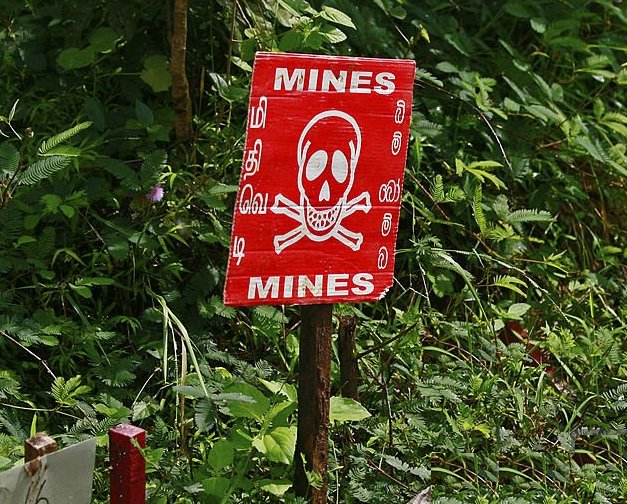
Photo - Installed outside the United Nations office in Geneva, Switzerland in 1997

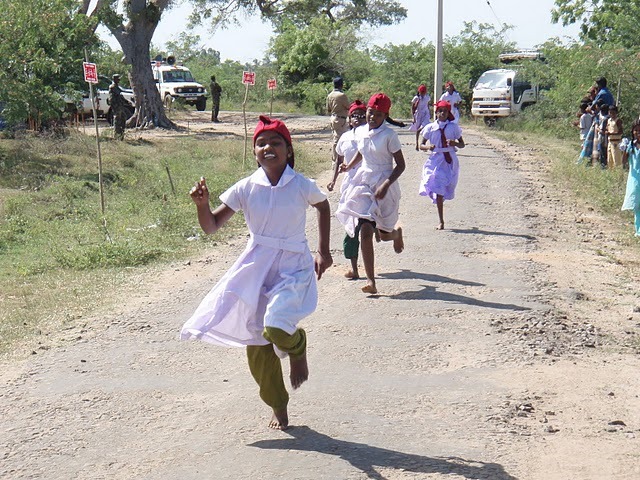
More than 100 million people worldwide are at risk from landmines, Explosive Remnants of War (ERW) and Improvised Explosive Devices (IEDs). From Afghanistan to Myanmar; from Sudan to Ukraine, Syria, the Occupied Palestinian Territory and beyond; these deadly devices litter rural and urban areas, indiscriminately killing civilians and blocking vital humanitarian and development efforts. On average, one person is killed or injured by explosive devices every hour – many of them children. More than two decades after the adoption of the Mine Ban Treaty, about sixty million people in nearly 70 countries and territories still live with the risk of landmines on a daily basis. They not only cost lives and limbs, but also displace communities and prevent them from accessing land that could be used for farming or building hospitals and schools as well as essential services such as food, water, health care and humanitarian aid. Despite international efforts to prevent the use of landmines they continue to be laid in conflict situations.
Humanitarian mine action first took shape in 1988 in Afghanistan in addition to the demining operations being carried out by military peacekeepers. Today, 165 countries are parties to the Mine Ban Treaty which is considered one of the most ratified disarmament conventions to date. The scale of humanitarian mine action under motion globally is colossal requiring immense resources and finances. However, over the years the dwindling financial support and reduced priority for such efforts have had a serious impact on the progress and hence, despite the progress, broader global efforts are needed to safeguard people from landmines towards a safer future. International cooperation, funding and research work including public private partnership is required to enhance operational capability and technical expertise for capability development for various rehabilitation measures towards victim assistance. If required the present policy framework needs an introspection for better global consensus and indulgence.
Introduction
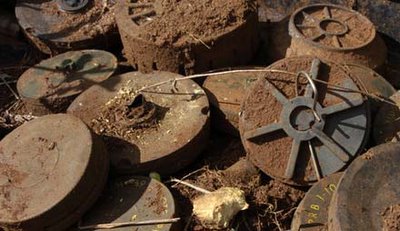
Landmines are one of the most environmentally destructive aftermaths of war facing the world today. The global landmine problem has transcended both humanitarian and sociological concerns to bring about environmental damage. Disruption of land’s stability, pollution and loss of biodiversity constitute major ecological repercussions of landmine crisis including devastating impact on economy which has led to loss of biodiversity, ecological crisis, soil contamination, loss of productivity, threat to food security, community health, poverty and social marginalisation. Landmines are a threat to sustainable development as all above issues are interlinked. Its contamination led to under-development of nation because of access denial to utilise natural resources like water, forest, land etc. Excessively intensive cultivation, overgrazing and deforestation in the mine free lands led to ecological imbalance. Landmines cause refugee and internal displacement problem. They terrorize and demoralize civil society as well. Their impact on the fragile health system of the country where they have been used in greater number can be overwhelming. The threat of mines hinders relief operations by preventing access to certain areas by aid agencies, disrupting road networks and necessitating the implementation of landmine clearance operations which are vastly expensive both in financial and human terms. A simple mine cost less than $3, its clearance however requires $300 to $1000 making demining a very costly and slow process.
Humanitarian mine action refers to a range of activities designed to reduce the social, economic and environmental impact of landmines and explosive remnants of war (ERW). The ultimate goal is to create a safe environment where civilians can live without fear and where recovery and development can take place. The United Nations (UN) and various non-governmental organizations (NGOs) are key actors in this field, coordinating efforts and setting international standards to improve safety and effectiveness. The goal to be achieved however, is nowhere near culmination, which opens up the prospect to ponder whether the present policies & treaties on humanitarian action needs a relook to ensure safer communities in the future.
Long Term Impact of Landmines & UXO including a Global Scan
The long-term effects of landmines from past conflicts are devastating, causing lasting human suffering, environmental damage, economic stagnation and social disruption for decades after fighting ends. In many cases, these hidden weapons continue to kill and maim civilians, with children being particularly vulnerable. Survivors often face lifelong physical challenges from amputations, blindness and other severe injuries. In Bosnia-Herzegovina, a survey of survivors, decades after the war found high rates of amputation, multiple surgeries and hospitalisations. In Cambodia, many survivors of landmine explosions during the Khmer Rouge period and subsequent conflicts are still dealing with severe injuries.
• Psychological Impact. The constant threat and experience of landmine explosions cause deep, long-lasting psychological damage. This includes anxiety, depression and Post-Traumatic Stress Disorder (PTSD) in survivors, their families and entire communities living in fear. Studies in Cambodia and Bosnia found high prevalence of these disorders decades after the conflicts ended. The threat of hidden landmines creates a ‘culture of fear’ that can affect multiple generations. Children grow up knowing of the danger and communities remain fearful of fully utilizing their land, even after clearance.
• Sociological Impact. Social and Political Social and political instability in an implied effect of landmines. Landmines can force communities to abandon their homes and land, creating a long-term refugee and displacement crisis. This leads to overcrowding in urban areas and strains public services.
The presence of landmines complicates humanitarian aid and post-war reconstruction efforts. They obstruct access for aid workers, delay the rebuilding of essential infrastructure and prevent displaced people from returning home. As seen in Afghanistan and South Sudan, landmine contamination can exacerbate land rights issues and create new disputes as displaced people attempt to reclaim their property. Landmines may also be used as de facto property markers, further complicating recovery.
• Economic Impact. Landmines prevent post-conflict countries from rebuilding their economies. Fertile farmland is rendered unusable, hindering agriculture and increasing food insecurity. Infrastructure projects like road and railway reconstruction are delayed, stifling trade and development. For farming families, a landmine injury to a breadwinner can push the family deeper into poverty. The high costs of medical care, rehabilitation and prostheses create a significant financial burden. Both local and foreign investors are discouraged from investing in mine-affected areas due to safety concerns, further limiting economic opportunities and trapping entire regions in cycles of poverty. Removing landmines is a slow, dangerous and expensive process. The cost to clear a single mine can be hundreds of times more than its cost to produce, placing an enormous financial burden on affected nations.
• Environmental Impact. Landmines significantly contribute to environmental degradation as well. Explosives and other materials in landmines can contaminate soil and water with toxic chemicals and heavy metals, posing risks to human health and local ecosystems for decades. Mine contamination can limit access to forests, rivers and wetlands, disrupting ecosystems and contributing to a loss of biodiversity. Wildlife is also at risk of triggering landmines. The threat of landmines can lead to the over- cultivation of safe areas, causing soil degradation and deforestation. In other cases, extensive clearing operations can unintentionally cause further environmental damage, such as soil erosion.
Recent Conflicts
In recent global conflicts, landmines have been used as a defensive weapon to control territory and as an offensive weapon to create extensive fear and humanitarian crises. State militaries and non-state armed groups continue to use landmines and victim-activated Improvised Explosive Devices (IEDs) in conflicts worldwide, despite a global ban.
Since Russia's full-scale invasion in 2022, Ukraine has become one of the most heavily mined countries in the world. Russian forces have used at least 13 types of anti-personnel mines and 13 types of anti-vehicle mines. They have remotely delivered mines via rockets and planted booby-traps with grenades during their retreat. In 2022, Ukraine also used rocket-delivered anti-personnel mines, a violation of the Mine Ban Treaty. Landmines in fields and on rural paths are severely hindering Ukraine's agricultural sector, a crucial part of its economy. In 2023, Ukraine recorded 580 casualties from mines and explosive remnants of war.
Decades of conflict have resulted in Myanmar becoming the world's deadliest country for landmine casualties. The military junta and non-state armed groups use landmines indiscriminately in civilian areas, including near homes, schools and clinics. Reports indicate the military has forced civilians, including children, to walk ahead of troops as "human minesweepers". Landmines were placed on routes used by fleeing Rohingya refugees. The ongoing contamination prevents displaced people from returning home and resuming their livelihoods.
After more than a decade of war, large parts of Syria are heavily contaminated with mines and other explosive ordnance. The Syrian government, its allies (including Russia) and non-state armed groups have all used landmines and IEDs extensively. As displaced people attempt to return home, they face the constant danger of explosive remnants. In 2023, Syria had the second-highest number of landmine casualties globally. Mine contamination poses a significant obstacle for humanitarian aid and reconstruction efforts.
In conflicts like Ukraine, landmines have been used to slow down or block opposing forces and create defensive lines. Forces use mines to deny the enemy and civilian populations access to strategic resources or territories. In Myanmar and Syria, landmines are deliberately placed to create fear, displace populations, disrupt agriculture and punish civilians suspected of supporting opposing groups. Modern conflicts, particularly those involving non-state armed groups, see the extensive use of IEDs. These function like landmines and often inflict even more severe injuries, including multiple amputations. In addition to being hand-emplaced, modern mines can be scattered remotely by rockets and drones, making them more difficult to map and clear. New seismic-activated mines can remain dormant until they detect a person.
These recent uses highlight a worrying trend where a global ban is being tested. Many non-state armed groups are not bound by the Mine Ban Treaty and some states, such as Russia and Myanmar that are not party to the treaty continue to deploy them. Based on the devastation caused by landmines in past conflicts, several key lessons have been learned. These insights, drawn from extensive post-conflict clean up and recovery efforts, underscore the indiscriminate and long-term harm caused by these weapons.
Unlike other weapons, landmines do not distinguish between combatants and civilians and their effect is not limited to the period of active war. Landmine campaigner Jody Williams famously called the devices ‘the perfect soldier’, as they continue to kill and maim long after a war ends. The true extent of the devastation becomes apparent for years, or even decades, as people attempt to rebuild their lives and return to normal activities. In recent years, an average of 85% of landmine casualties were civilians, with children accounting for nearly half of the victims.
Early attempts to justify the use of landmines as a ‘low-cost’ defensive measure have proven to be a moral and financial failure. Studies have shown that the military value of anti-personnel mines is minimal when compared to the humanitarian consequences. Today's militaries can use more effective and precise alternatives, such as sensor technology and remote surveillance, to secure areas without relying on indiscriminate weapons.
Addressing the legacy of landmines is more complex than simply clearing the explosives. It requires a multi- pronged approach that includes social and economic recovery. Landmine survivors require extensive, long- term care, including physical and psychological therapy, but victim assistance is severely underfunded compared to mine clearance efforts. Demining programs can be an important step toward peace building, bringing former warring parties together to cooperate on a common goal of land clearance and community safety.
The fight against landmines is a global challenge that can only be tackled through a united international effort. The Ottawa Treaty has successfully stigmatized the use of anti-personnel mines, leading to a huge reduction in global use and production. However, major non-signatories continue to produce and use these weapons. The rise in the use of victim-activated improvised explosive devices (IEDs) by non- state armed groups poses a new and dangerous challenge to the treaty's goals. The recent use of mines by nations like Russia and Myanmar and even treaty members like Ukraine, is an alarming trend that requires strong and unified condemnation from the international community to protect the treaty's norms.
For humanitarian mine action, several key international treaties, conventions and United Nations policies are in existence. The central framework is the Anti-Personnel Mine Ban Convention, which is supported by additional conventions and comprehensive policies for implementation and coordination.
Present Policies & Treaties including the Humanitarian Actions
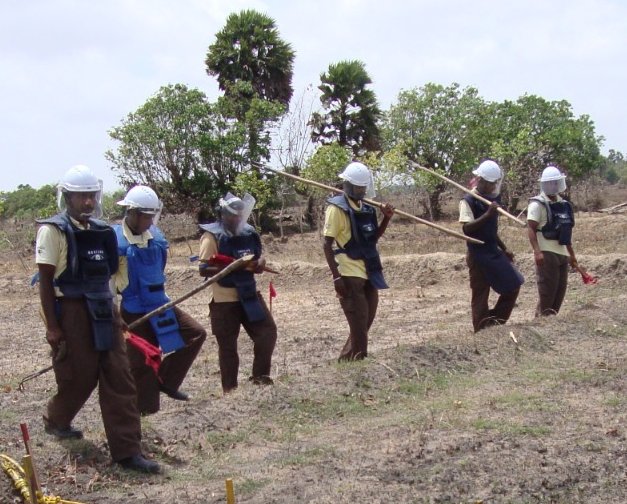
Humanitarian mine action is built on five core pillars, each addressing a different facet of the problem namely Clearance or Demining, Risk reduction, Victim assistance, Stockpile destruction and Advocacy. Demining is a challenging process that employs a variety of techniques to maximize safety and efficiency to include manual clearance using metal detectors and hand tools, mechanical clearance with specialised equipment and detection by animals like dogs and rats.
Despite significant advances, humanitarian mine action faces several persistent challenges. Detecting and clearing mines is a very expensive, laborious, and slow process, especially when compared to the low cost and ease of laying them. New technology exists but is often limited by sensitivity and operational complexity. Detecting modern, low-metal mines remains difficult and can be hampered by terrain and soil conditions. Many mine action programs are chronically underfunded, forcing organizations to compete for limited resources. This can impact the quality of equipment and the speed of clearance. The vast majority of mine casualties are civilians and landmines continue to kill or injure thousands of people every year. While mine action is essential for long-term development, coordinating mine clearance with other aid initiatives can be difficult. This can lead to delays in projects for agriculture, infrastructure and housing.
Primary Treaties
• Anti-Personnel Mine Ban Convention (Ottawa Treaty). The most comprehensive treaty regarding anti-personnel landmines adopted on 01 Mar 1999, has been ratified or acceded to by 165 countries as of March 2025. Parties are forbidden from using, producing, acquiring, stockpiling, or transferring anti-personnel mines. It requires states to destroy their stockpiled mines within four years and clear all mined areas under their control within ten years. It also mandates assistance for landmine survivors. It does not regulate anti- vehicle mines or remotely-detonated devices.
• Convention on Conventional Weapons (CCW). This treaty aims to ban or restrict the use of conventional weapons that cause excessive injury or have indiscriminate effects. Amended Protocol II of the CCW restricts the use of mines, booby-traps and other devices. Unlike the Ottawa Treaty, it does not impose a total ban, but it does place limitations. The protocol prohibits the use of undetectable anti-personnel mines and their transfer. It also requires mines placed outside marked, fenced areas to be equipped with self- destruction or self-deactivation mechanisms.
• Convention on Cluster Munitions (CCM). This treaty addresses another form of explosive remnants of war. It comprehensively bans the use, production, stockpiling and transfer of cluster munitions. It requires states to clear affected areas, destroy stockpiles and provide assistance to victims.
• Convention on the Rights of Persons with Disabilities (CRPD). This treaty is relevant to mine action through its provisions on victim assistance. It ensures the rights of landmine survivors are protected, particularly concerning rehabilitation, social inclusion and access to services.
Mine Action Community
The mine action community is an extensive and varied network of organizations working in numerous affected countries.
• United Nations Mine Action Service (UNMAS). UNMAS is the central coordinating body for humanitarian mine action within the UN system. It is responsible for developing and updating policies andstandards, coordinating the mine action work of various UN agencies and advocating for the implementation of international legal instruments.
• International Mine Action Standards (IMAS). These standards guide humanitarian mine action programs globally, ensuring consistent and professional practices. They provide a framework for all aspects of mine action, including risk education, clearance and victim assistance.
• UN Inter-Agency Coordination Group on Mine Action (IACG-MA). This group brings together UN offices, agencies and funds to ensure a unified and coordinated approach to mine action.
• Non-Governmental Organizations (NGOs). Humanitarian NGOs are crucial to the on-the-ground implementation of mine action. Key NGOs include the HALO Trust, Mines Advisory Group (MAG), Norwegian People's Aid (NPA) and Handicap International (HI).
• The Geneva International Centre for Humanitarian Demining (GICHD) provides expertise, research and standardisation support to the sector.
• The Landmine and Cluster Munitions Monitor, run by the International Campaign to Ban Landmines (ICBL), provides crucial data and reporting.
• International Committee of the Red Cross (ICRC) is a guardian of international humanitarian law, promotes compliance with mine-related treaties and provides medical and rehabilitation support to mine victims in conflict zones.
Despite the treaties, mine-related casualties have risen in recent years, largely due to the use of Improvised Explosive Devices (IEDs) and violations by both state and non-state actors. Major powers like the United States, Russia and China have not joined the Ottawa Treaty and some parties have announced intentions to withdraw due to geopolitical factors. Victim-activated IEDs pose a growing and complex challenge and their use is specifically prohibited under the Mine Ban Treaty. A recent UN report highlighted a significant drop in funding for mine action, which harms the sustainability of humanitarian efforts.
Scale of Humanitarian Actions in Motion with Impact on Resources & Finance
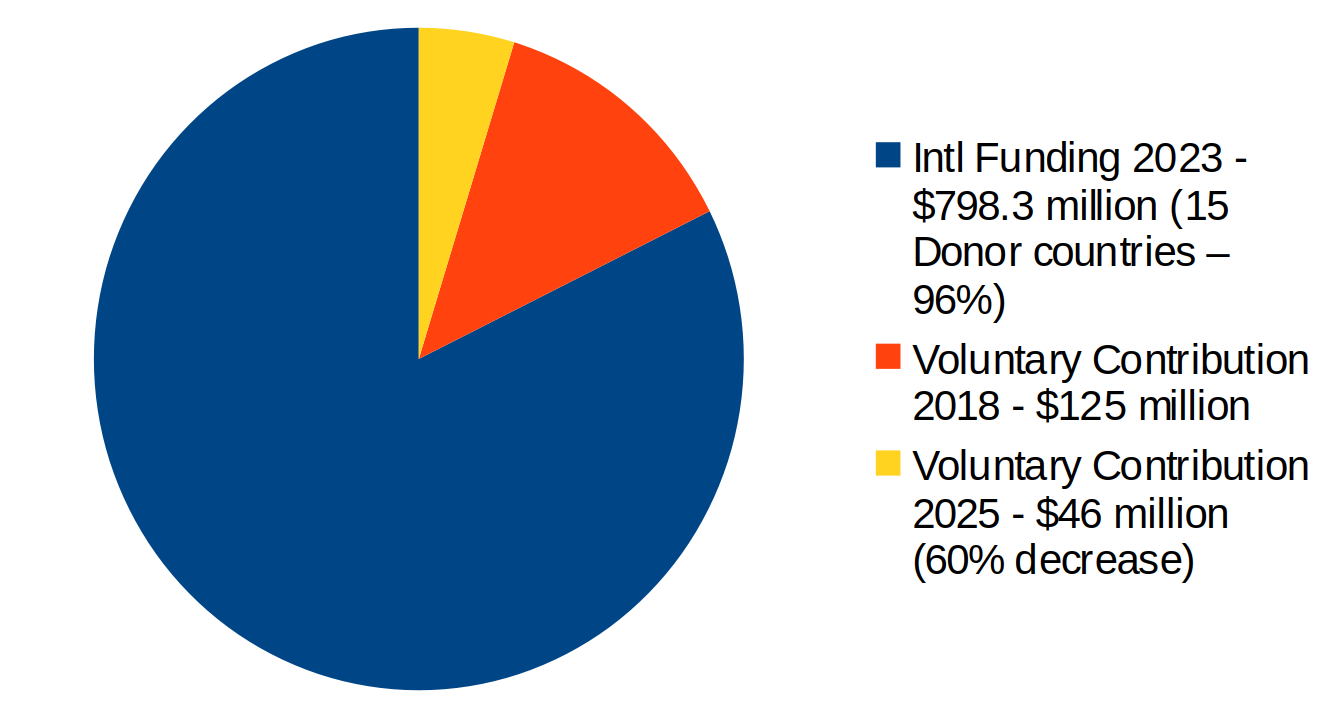
The scale of humanitarian mine action is vast, requiring hundreds of millions of dollars in annual funding and the coordinated effort of numerous international and local organisations. Despite the immense and increasing need, humanitarian mine action faces a persistent challenge of declining funding from traditional donors. In 2023, 34 donors provided $798.3 million in international support for mine action, a similar amount to 2022. However, this is largely driven by a small number of top donors. Funding remains concentrated among a small group of contributors. In 2023, the 15 largest donors provided 96% of all international funding. The United States, Germany and the European Union were the three largest contributors. A 2025 UN report noted that voluntary contributions to the UN Trust Fund for Mine Action dropped significantly, from $125 million to $46 million over seven years. This downward trend undermines the sustainability and effectiveness of global mine action efforts. In 2023, half of all international funding went to support clearance and integrated clearance programs. Victim assistance received only $47 million or 6% of total funding, despite a 25% increase from the previous year. Most of this was directed to just five states. Experts have called for innovative financing solutions and stronger partnerships with the private sector and philanthropic institutions to address the persistent funding gap and better link mine action with sustainable development goals.
Need to Renew Policy Framework & Way ahead
Persistent and Evolving Threats
The nature of armed conflict has changed significantly since the landmark Anti-Personnel Mine Ban Convention (Ottawa Treaty) was established.
• Proliferation of Improvised Explosive Devices (IEDs). Non-state armed groups and other actors now rely heavily on victim-activated IEDs, which function similarly to landmines but are not fully addressed by existing treaties. This trend results in continued high casualty rates, as seen in Syria and Afghanistan, challenging the spirit and effectiveness of the global ban.
• Complex Urban Environments. Modern warfare is increasingly fought in densely populated cities, where explosive ordnance contamination poses severe risks. The current HMA framework was primarily designed for rural contexts and clearing collapsed buildings and other urban infrastructure requires new methods, standards and equipment.
• Widespread Contamination. Recent conflicts, such as the invasion of Ukraine, have involved the massive, widespread deployment of mines and other explosives. This scale of contamination is overwhelming for current HMA resources and policy frameworks, which struggle to respond effectively in ongoing combat zones.
Integration of Gaps
The existing framework often treats mine action as a standalone, post-conflict activity, failing to integrate it with other critical humanitarian and development goals.
• Disconnect from Health Sector. There is insufficient coordination between HMA and the health sector, especially regarding trauma care for explosive ordnance casualties. HMA organizations have significant medical capabilities, but current policies do not mandate close, strategic partnerships with local health authorities.
• Overlooking Community Engagement. Effective mine action requires deep community engagement and the consideration of local customs and practices. However, some policies still favour top-down approaches, which can fail to incorporate local knowledge and community priorities, wasting resources and eroding public trust.
• Failure to Address Climate Change. The current framework does not account for the impact of climate change on HMA operations. Shifting weather patterns, flooding and desertification can uncover or move landmines, complicating clearance efforts and increasing risk.
Regional Compulsions for Landmine Use
There are certain inherent compulsions and self-interests of various entities which fosters continued use of landmines in conflict affected or conflict induced areas.
Security and Military Advantage
Weaker military forces or non-state armed groups often use landmines and victim-activated improvised explosive devices (IEDs) to counter a technologically superior adversary. By creating minefields, they can deny access to territory, protect installations, and inflict casualties on more powerful conventional armies. In regions with contested borders or where states perceive a threat of invasion, landmines are used to create defensive barriers and deter enemy incursions. In the context of the 2022 invasion of Ukraine, some NATO- member countries near Russia considered withdrawing from the Mine Ban Treaty to address their security concerns. Landmines are sometimes used to control or defend strategic areas, such as resource-rich regions, roads, or lines of communication. They may also be used to depopulate areas, displace communities or target civilians to instil fear, a tactic sometimes called ‘nuisance mining’.
Economic and Resource Control
Armed groups, particularly in sub-Saharan Africa and Latin America, have been known to use landmines to protect valuable resources like coca crops or mining areas, including diamond and gold mines. Some groups use landmines to extort money from local populations by charging tolls on roads they control or denying access to livelihood activities like farming, hunting or logging. When agricultural land is contaminated with mines, it can disrupt farming, increase food insecurity and perpetuate poverty, which can be a strategic goal of some warring parties.
Lack of Alternatives and Low Cost
For financially constrained states or non-state actors, landmines are seen as a cheap and effective way to achieve military objectives. The low cost of production contrasts sharply with the high and dangerous costs of clearance. Landmines can be deployed with minimal technical training, making them accessible to a wide range of actors, including those with limited military expertise.
Mitigating Regional Compulsions
Diplomatic and Political Engagement
Regional organizations like the African Union or the Organization of American States can play a critical role in promoting dialogue and finding diplomatic solutions to regional tensions that drive the use of landmines. Strong and sustained political condemnation of landmine use, even by states not party to the Mine Ban Treaty, reinforces the international norm against these weapons. Universal adoption and adherence to the Mine Ban Treaty, along with sustained diplomatic pressure on non-state actors to comply, is crucial. Regional states can push treaty membership as a benchmark of legitimate behaviour.
Security Sector and Alternative Technologies
States and international partners can promote military doctrines that replace landmines with modern, non- lethal and more precise alternatives, such as advanced sensor technologies and remote surveillance. In post- conflict settings, security sector reform programs can help reintegrate former combatants, address root causes of insecurity and establish a legitimate state monopoly on the use of force, thus reducing reliance on landmines. Investing in and disseminating better demining technologies, including dual-sensor detectors and Ground-Penetrating Radar (GPR), can make clearance safer and more efficient, reducing the long-term threat and undermining the weapon's perceived value.
Economic Development and Victim Assistance
Integrating mine action with broader Sustainable Development Goals (SDGs) is essential. Clearing land for agriculture and other economic activities can help reduce poverty and dependency on aid, which can incentivise landmine use. Addressing the economic drivers of landmine use requires providing alternative livelihoods and supporting local economies, particularly in regions where armed groups exploit resources or use mines for extortion. Providing better assistance, rehabilitation and social integration services for landmine survivors demonstrates a commitment to addressing the human cost of the weapons, shifting the focus from military utility to humanitarian impact.
Regional and Local Cooperation
Many regions affected by mines, such as the Caucasus, share borders and complex security issues. Regional cooperation in information-sharing, technology and clearance can facilitate a more effective and coordinated response. Engaging local communities in mine risk education and demining activities can build trust, improve data collection and ensure that mine action programs are tailored to the specific needs of the affected population.
A roadmap for developing rehabilitation capabilities in Humanitarian Mine Action (HMA) must adopt a holistic, nationally-owned and survivor-centric approach. It should address all aspects of victim assistance, from immediate trauma care to long-term economic and social reintegration, while building sustainable local capacity.
Capability Development for Rehabilitation Roadmap
Implementation of the current policy framework is hampered by issues of political will, accountability and the rise of non-state actors. The continued use of mines by states not party to the Ottawa Treaty, as well as the use of IEDs by non-state actors, challenges the global norm against landmines. A renewed framework is needed to address these accountability gaps and strengthen normative pressure. Lengthy and complex administrative procedures can delay the implementation of HMA projects, leading to resource wastage and lower staff morale. Challenges in enforcing treaties and holding violating parties accountable can lead to further erosion of the international legal framework. A renewed approach needs to strengthen monitoring and evaluation, focusing on evidence-based impact.
Regional compulsions for the use of landmines are complex and interconnected, often stemming from security, economic and strategic considerations. In many cases, landmines are used as a weapon of perceived military necessity by both state and non-state actors, particularly in asymmetric conflicts where conventional military power is mismatched. Mitigating these compulsions requires a multifaceted approach involving diplomacy, development aid and regional cooperation.
Rapid Response and National Assessment
Train healthcare workers and community first responders in mine-affected areas on emergency first aid for blast injuries. This includes trauma management, wound care and pain management. Create a formal, inter- agency mechanism to identify victims and refer them to appropriate medical facilities, physical rehabilitation centres and psychosocial support services. This system should be culturally sensitive and accessible. Partner with the national health ministry to incorporate mine casualty protocols into the public health system. This ensures a long-term, sustainable response that outlives a specific HMA program.
Go beyond casualty data by assessing the needs and priorities of survivors and their families, disaggregated by age, gender and disability. This includes physical, psychological, social and economic needs. Identify existing governmental and non-governmental services that can be leveraged or strengthened. This prevents duplication of effort and highlights service gaps. Formalize a national mine action authority or similar body with a clear mandate for victim assistance. This central body should coordinate all stakeholders, including ministries, NGOs and survivor-led organisations.
Building Sustainable Infrastructure
Implement training programs for prosthetists, physical and occupational therapists and counsellors, with a focus on local recruitment and retention. Use a ‘team approach’ to rehabilitation training that includes all relevant clinical skills. Support the establishment and expansion of peer-to-peer support groups led by survivors themselves. This provides emotional and social support while reducing stigma and leveraging shared experiences. Move beyond institutional care by training community health workers and volunteers to deliver basic rehabilitation services, especially in rural or remote areas.
Focus on developing and providing low-cost, durable and culturally appropriate assistive devices, including prostheses, mobility aids and wheelchairs. Invest in local production capacity to ensure sustainability and reduce dependency on imports. Establish and train local technicians to provide ongoing maintenance and repair for assistive devices. This prevents abandonment of devices due to minor faults.
Long-Term Economic and Social Reintegration
Develop and fund vocational training programs that meet market demand and are inclusive of people with disabilities. Focus on training that reduces stigmatisation and provides meaningful employment. Partner with local businesses to create job opportunities for survivors. Provide support for small business development and microfinance for survivor-led enterprises. Link economic empowerment initiatives for survivors with national development strategies and Sustainable Development Goals (SDGs) to ensure long-term focus and funding.
Advocate for national laws and policies that align with the Convention on the Rights of Persons with Disabilities (CRPD). This includes addressing discrimination and ensuring access to education, employment and social protection. Ensure that children who are mine survivors have access to inclusive preschool and school education. Provide necessary accommodations and support to facilitate their full participation. Strengthen psychological and psychosocial support services, including counselling and community-based support groups, to address the long-term mental health consequences of mine injuries.
Implementation Principles
Involve survivors and their representative organisations in all stages of planning, implementation and evaluation. This ensures that programs meet their actual needs and respect their dignity. Recognise that women, girls and boys have different needs and challenges related to mine injuries. Develop programs that are responsive to these specific requirements. Acknowledge that victim assistance is a national responsibility and requires a coordinated effort across multiple sectors, including health, social welfare, education and labour.
Conclusion
The increasing scale and complexities of global asymmetric conflicts and rampant use of landmines in these areas have contributed to increasing the difficulties for humanitarian mine action initiatives. The dwindling financial support for humanitarian mine action over the years have enhanced the challenges manifold. The internationally recognised humanitarian policies are being questioned by victim states due to the continued causalities and population displacements.
Over the past few years the HMA sector has increasingly focused on the challenge of rooting its activities in solid assessments of social and economic impact. This shift is not only leading to major improvements in the quality of mine action, but will also facilitate the integration of mine action within the broader field of post- war reconstruction and development. The essence of the shift in HMA lies in a reorientation from defining the mine problem in terms of numbers of mines or total area of land suspected of being contaminated by mines to defining it in terms of the impact of mines on human populations. This reorientation has inspired the development of different approaches to impact assessment, all drawing on insights from the wider development debate.
There is need for policy shift to redraw the boundaries of the humanitarian system, acknowledging the many local and informal actors that do respond to crises but are unable to receive appropriate financial support. The various local and national actors need to be encouraged and provided with the essential support ecosystem to increase their role as both humanitarian finance recipients and implementers of humanitarian action. It may also require to expand the available pool of relevant finance and also to remove some of the existing, dominant actors in the established, orthodox international financing system for a renewed and fresh humanitarian mine action ideology. The world should expect more disasters, crises and conflicts in the coming years and thus a continued need for humanitarian mine action that is able to uncover how assistance to the millions of people impacted by such crises can best be resourced.
About the Author
Colonel Narender Singh Rathore is an alumnus of Cadets Training Wing/ Indian Military Academy and got commissioned to Corps of Engineers in December 2005. The officer had tenures with his parent unit at varied terrains. The officer had tenated a tenure with Border Roads Organisation and staff appointments with both Armoured and Infantry formations. The officer also has served as a UN military observer with MONUSCO at Democratic Republic of Congo.
References
Landmines: A Threat to Sustainable Development - IOSR Journals.
UN Newsnews.un.org - ‘Safe futures start here’: UN calls for global action. The deadly legacy of landmines - UN News - https://news.un.org United Nations Convention on the Rights of Persons with Disabilities. UNMAS – https://www.unmas.org